

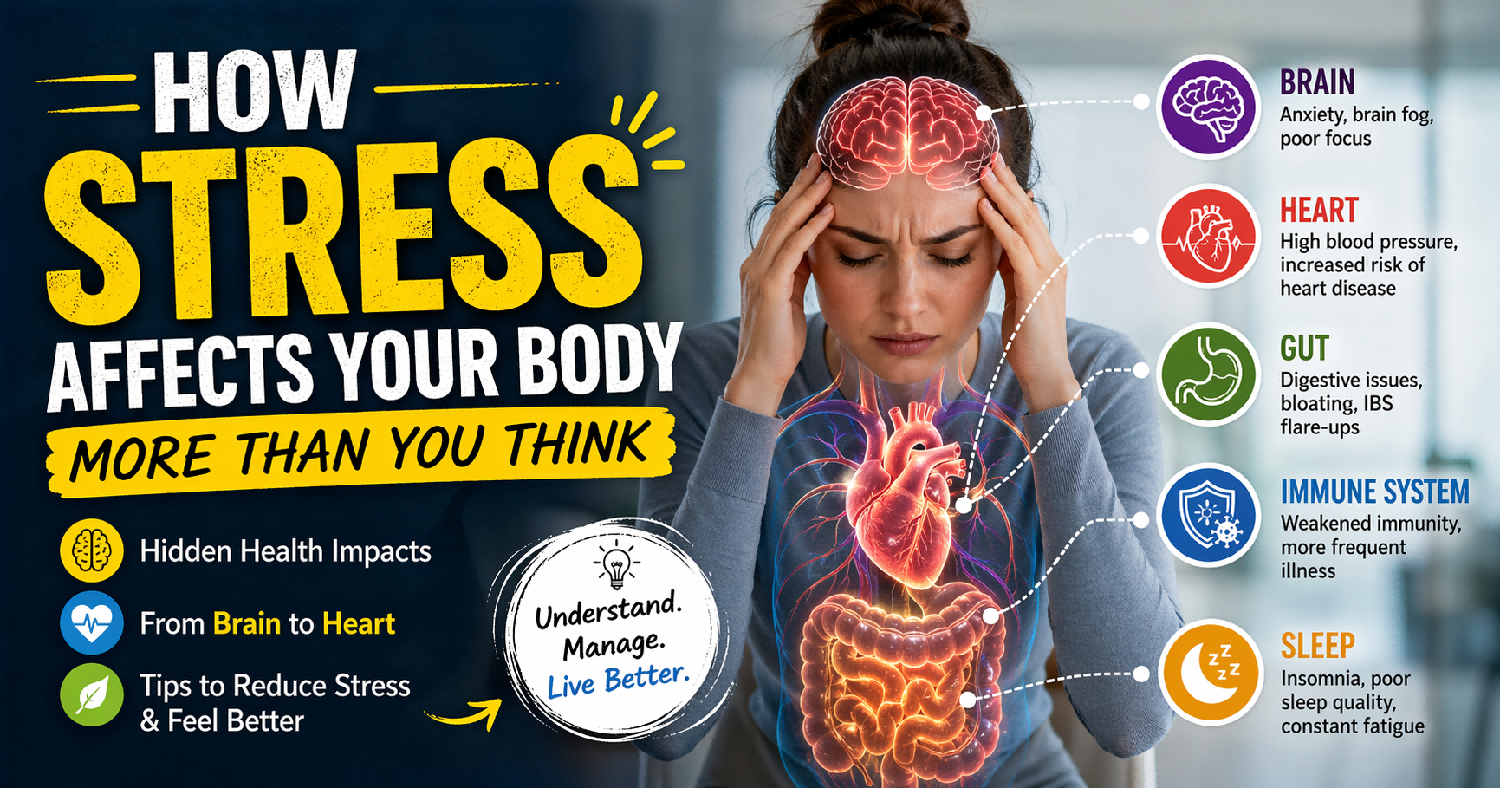
Stress is often treated like a mental problem—something that lives only in your thoughts. But the truth is far more serious. Stress doesn’t just affect how you feel. It quietly reshapes how your entire body functions.
From your brain to your gut, from your sleep to your immune system, chronic stress can create a chain reaction that impacts nearly every part of your health. And most people don’t even realize it’s happening.
This guide explores how stress affects your body in ways you might not expect—and what you can do to regain control.
What Happens Inside Your Body When You’re Stressed?
When you experience stress, your body activates the “fight or flight” response. This is your survival system kicking in.
Here’s what happens instantly:
- Your brain releases stress hormones like cortisol and adrenaline
- Your heart rate increases
- Your breathing becomes faster
- Blood is redirected to muscles
This is helpful in short bursts. But when stress becomes chronic, your body stays in this heightened state for too long—leading to real damage over time.
1. Stress and Your Brain: Mental Fog and Anxiety
Long-term stress affects how your brain processes information.
You may notice:
- Difficulty concentrating
- Forgetfulness
- Increased anxiety or irritability
- Overthinking and racing thoughts
Chronic stress can even shrink the hippocampus, the part of the brain responsible for memory and learning.
2. Stress and Your Heart: Hidden Cardiovascular Risks
Your heart works harder under stress.
Over time, this can lead to:
- High blood pressure
- Increased risk of heart disease
- Irregular heart rhythms
Stress doesn’t just feel intense—it physically strains your cardiovascular system.
3. Stress and Your Gut: The Mind-Gut Connection
Ever felt “butterflies” in your stomach when nervous? That’s the gut-brain connection in action.
Chronic stress can cause:
- Stomach pain or cramps
- Bloating or indigestion
- Changes in appetite
- Worsening of conditions like IBS
Your gut has its own nervous system—and stress directly interferes with it.
4. Stress and Your Immune System: Getting Sick More Often
When stress hormones stay elevated, your immune system becomes less effective.
This means:
- You may catch colds more easily
- Recovery takes longer
- Inflammation in the body increases
Stress doesn’t just make you feel worn out—it lowers your body’s defenses.
5. Stress and Your Sleep: A Vicious Cycle
Stress and sleep problems feed into each other.
You might experience:
- Trouble falling asleep
- Waking up frequently
- Feeling tired even after sleeping
Poor sleep increases stress—and more stress makes sleep worse.
6. Stress and Your Body: Physical Symptoms You Might Ignore
Stress often shows up physically before you even recognize it mentally.
Common symptoms include:
- Headaches or migraines
- Muscle tension (especially neck and shoulders)
- Skin issues like acne or rashes
- Hair loss
These signals are your body asking for attention.
How to Reduce Stress Before It Affects Your Health
Understanding stress is the first step. Managing it is what protects your health.
Here are simple, effective strategies:
1. Build Micro-Habits
Small actions like deep breathing, stretching, or short walks can interrupt the stress cycle.
2. Create Daily Structure
A consistent routine reduces uncertainty and helps your mind feel more in control.
3. Limit Overstimulation
Too much news, social media, or multitasking can keep your brain in a constant stress state.
4. Move Your Body
Exercise helps regulate stress hormones and boosts mood naturally.
5. Prioritize Sleep
Quality sleep is one of the most powerful tools for stress recovery.
Final Thoughts
Stress isn’t just “in your head.” It’s a full-body experience that can slowly impact your health in ways you may not notice right away.
The good news? You don’t need to eliminate stress completely—you just need to manage it better.
Start small. Pay attention to your body. And remember: the earlier you respond to stress, the easier it is to prevent long-term damage.


