

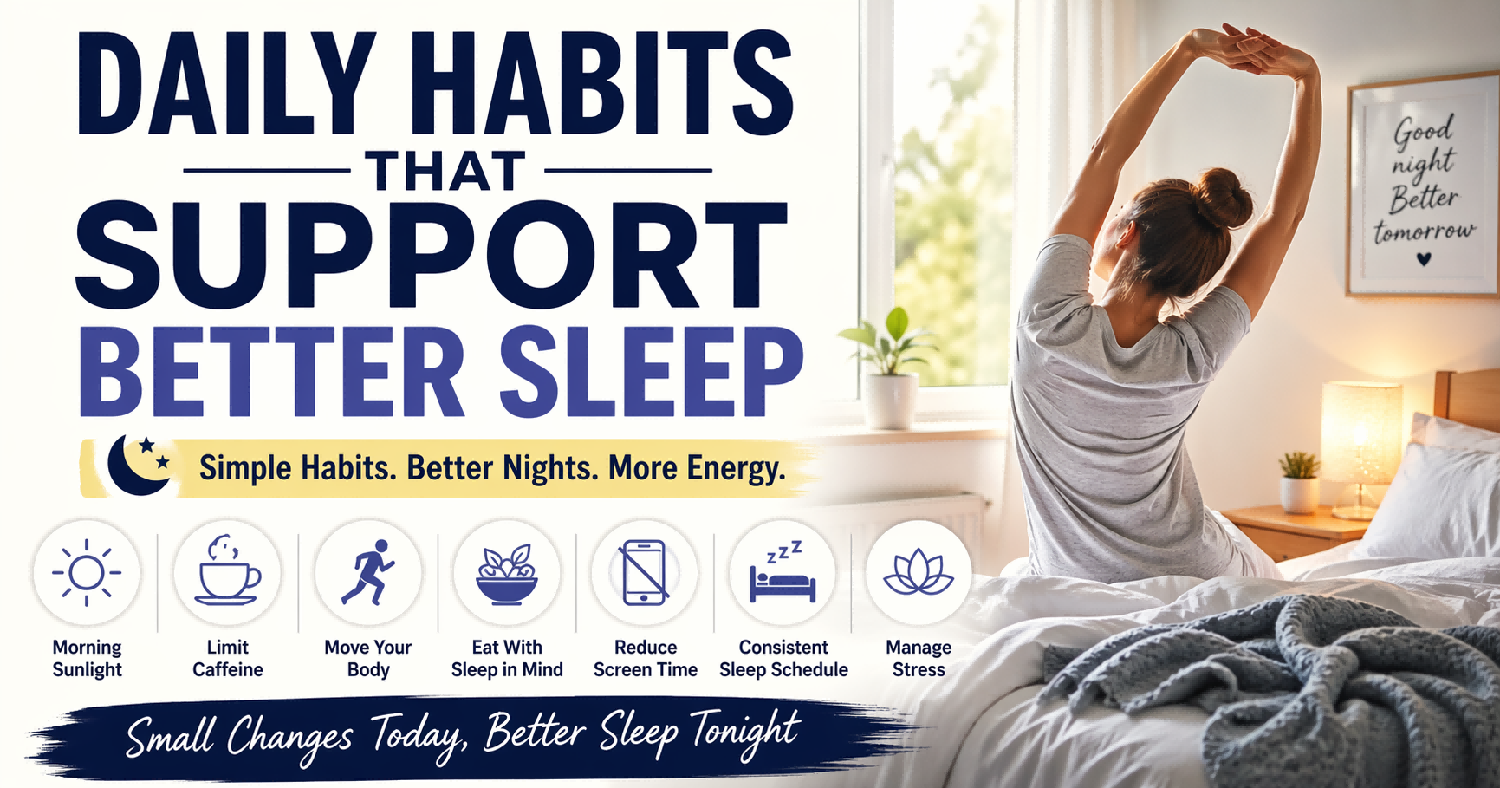
Getting a good night’s sleep isn’t just about what you do at bedtime—it’s about how you live your entire day. From your morning routine to your evening wind-down, small daily habits can make a big difference in how easily you fall asleep and how rested you feel the next day.
If you’ve been struggling with restless nights or low energy, these simple, science-backed habits can help you build a healthier sleep routine—naturally.
🌅 Start Your Day With Natural Light
One of the most powerful ways to improve your sleep is surprisingly simple: get sunlight early in the day.
Exposure to natural light helps regulate your circadian rhythm—your body’s internal clock. When your brain senses daylight, it reduces melatonin (the sleep hormone) and increases alertness. Later in the evening, this rhythm helps your body naturally prepare for sleep.
Try this:
- Spend 10–20 minutes outside within an hour of waking
- Open your curtains right away
- Take a short morning walk or drink coffee near a window
☕ Watch Your Caffeine Intake
Caffeine can stay in your system for 6–8 hours (or longer), meaning that late-afternoon coffee could be sabotaging your sleep without you realizing it.
Better habits:
- Avoid caffeine after 2–3 PM
- Switch to herbal tea in the evening
- Be mindful of hidden caffeine (chocolate, soda, energy drinks)
🏃 Move Your Body (But Time It Right)
Regular physical activity improves sleep quality, helps you fall asleep faster, and reduces nighttime awakenings.
However, timing matters. Intense workouts too close to bedtime can increase alertness and delay sleep.
Best practices:
- Aim for at least 20–30 minutes of daily movement
- Morning or afternoon workouts are ideal
- Try gentle stretching or yoga in the evening instead of intense exercise
🍽️ Eat With Sleep in Mind
What and when you eat can affect your sleep more than you think.
Heavy meals late at night can cause discomfort, while going to bed hungry can also disrupt your rest.
Sleep-friendly eating habits:
- Finish large meals 2–3 hours before bedtime
- Avoid spicy or greasy foods late at night
- If needed, choose light snacks like yogurt, bananas, or nuts
📵 Create a Screen-Free Wind-Down Routine
Scrolling your phone before bed might feel relaxing—but it’s actually doing the opposite.
Blue light from screens suppresses melatonin and keeps your brain alert.
Try replacing screen time with:
- Reading a book
- Journaling or planning the next day
- Listening to calming music or a podcast
Even 30–60 minutes of screen-free time can significantly improve sleep quality.
🛏️ Stick to a Consistent Sleep Schedule
Going to bed and waking up at the same time every day—even on weekends—helps train your body to fall asleep more easily.
Irregular sleep patterns can confuse your internal clock, leading to insomnia-like symptoms.
Simple tip:
- Pick a realistic bedtime and stick to it
- Set a consistent wake-up time
- Avoid large variations between weekdays and weekends
🌙 Keep Your Bedroom Sleep-Friendly
Your environment plays a major role in how well you sleep.
A quiet, cool, and dark bedroom signals your brain that it’s time to rest.
Optimize your space:
- Keep the room cool (around 60–67°F / 15–19°C)
- Use blackout curtains if needed
- Reduce noise or use white noise
- Keep your bed for sleep (not work or scrolling)
💡 Manage Stress During the Day
Stress and racing thoughts are one of the biggest causes of poor sleep.
If your mind is busy at night, it often means stress wasn’t managed during the day.
Helpful habits:
- Practice mindfulness or meditation
- Write down worries or to-do lists earlier in the evening
- Take short breaks throughout the day to reset
Final Thoughts
Better sleep isn’t about one perfect habit—it’s about consistency across your entire day.
Start small. Choose 1–2 habits from this list and build from there. Over time, these simple changes can transform your sleep quality, boost your energy, and improve your overall well-being.
Because when you sleep better, everything in life feels easier.


