

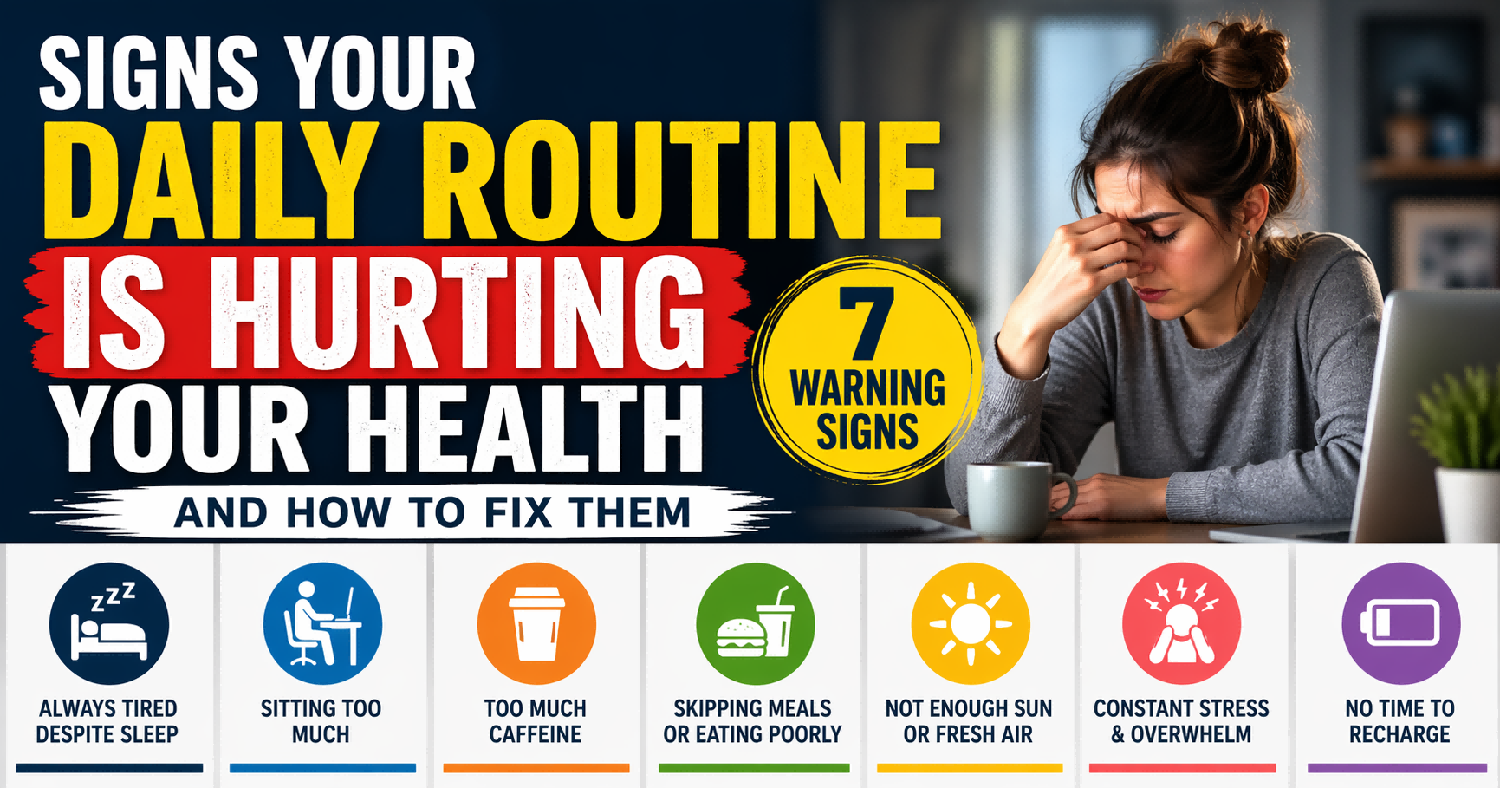
In today’s fast-paced world, routines are meant to make life easier. But what if your daily habits are quietly doing the opposite—draining your energy, affecting your mood, and even harming your long-term health?
The truth is, many people follow routines that feel “normal” but are actually working against their well-being. The problem isn’t always obvious. These habits build up slowly, making it easy to overlook the warning signs.
Let’s explore the subtle—but important—signals that your daily routine may be hurting your health, and what you can do to fix it.
1. You Feel Tired No Matter How Much You Sleep
If you wake up feeling exhausted even after 7–8 hours of sleep, your routine might be the problem—not your sleep duration.
Possible causes:
- Irregular sleep schedule
- Late-night screen exposure
- Eating heavy meals before bed
- Lack of physical activity during the day
Why it matters:
Chronic fatigue affects focus, productivity, and immune function. Over time, it can lead to burnout or deeper health issues.
Fix it:
- Keep a consistent sleep-wake schedule
- Reduce screen time at night
- Create a calming pre-sleep routine
2. You Spend Most of the Day Sitting
Modern routines often revolve around sitting—at desks, in cars, or on the couch.
Warning signs:
- Stiffness or back pain
- Poor posture
- Low energy levels
Why it matters:
A sedentary lifestyle is linked to heart disease, weight gain, and metabolic issues—even if you exercise occasionally.
Fix it:
- Stand or stretch every 30–60 minutes
- Try a standing desk or walking breaks
- Add light movement throughout the day
3. You Rely on Caffeine to Function
If you can’t start your day—or get through the afternoon—without multiple cups of coffee, your routine may be masking deeper issues.
Hidden problems:
- Poor sleep quality
- Blood sugar imbalance
- Chronic stress
Why it matters:
Too much caffeine can disrupt sleep, increase anxiety, and create energy crashes.
Fix it:
- Limit caffeine after midday
- Stay hydrated
- Focus on balanced meals for steady energy
4. You Skip Meals or Eat Without Thinking
Busy routines often lead to skipped meals or mindless snacking.
Warning signs:
- Sudden energy drops
- Cravings for sugar or junk food
- Digestive discomfort
Why it matters:
Irregular eating disrupts metabolism and can lead to weight gain, fatigue, and nutrient deficiencies.
Fix it:
- Plan simple, balanced meals
- Eat at consistent times
- Practice mindful eating
5. You Rarely Get Fresh Air or Sunlight
Spending most of your time indoors can quietly affect your health.
Signs:
- Low mood or motivation
- Trouble sleeping
- Feeling disconnected or sluggish
Why it matters:
Sunlight regulates your circadian rhythm and supports vitamin D production—both essential for physical and mental health.
Fix it:
- Spend at least 10–20 minutes outside daily
- Take short walks during breaks
- Open windows when possible
6. You Feel Constantly Stressed or Overwhelmed
If your routine feels like a nonstop cycle of pressure, your health is likely paying the price.
Warning signs:
- Irritability
- Difficulty concentrating
- Poor sleep
Why it matters:
Chronic stress increases cortisol levels, which can weaken immunity, disrupt sleep, and impact heart health.
Fix it:
- Schedule short breaks throughout the day
- Practice simple stress-reduction habits (deep breathing, journaling)
- Set realistic boundaries
7. You Have No Time to Recharge
A routine without rest isn’t productive—it’s unsustainable.
Signs:
- Feeling drained even after weekends
- Lack of motivation
- Reduced enjoyment in daily life
Why it matters:
Without recovery time, your body and mind cannot reset, leading to long-term burnout.
Fix it:
- Schedule downtime like you schedule work
- Limit overcommitment
- Prioritize activities that help you relax
How to Reset Your Routine (Without Overwhelm)
Improving your routine doesn’t require a complete lifestyle overhaul. In fact, trying to change everything at once often leads to failure.
Instead:
- Start with one small habit
- Build consistency before adding more
- Focus on progress, not perfection
Your daily routine should support your health—not quietly damage it.
Final Thoughts
Your routine shapes your life more than you think. Small habits, repeated every day, can either build your health—or slowly break it down.
The good news? Once you recognize the signs, you have the power to change them.
Start paying attention to how your routine makes you feel. Your body is always sending signals—it’s just waiting for you to listen.


