

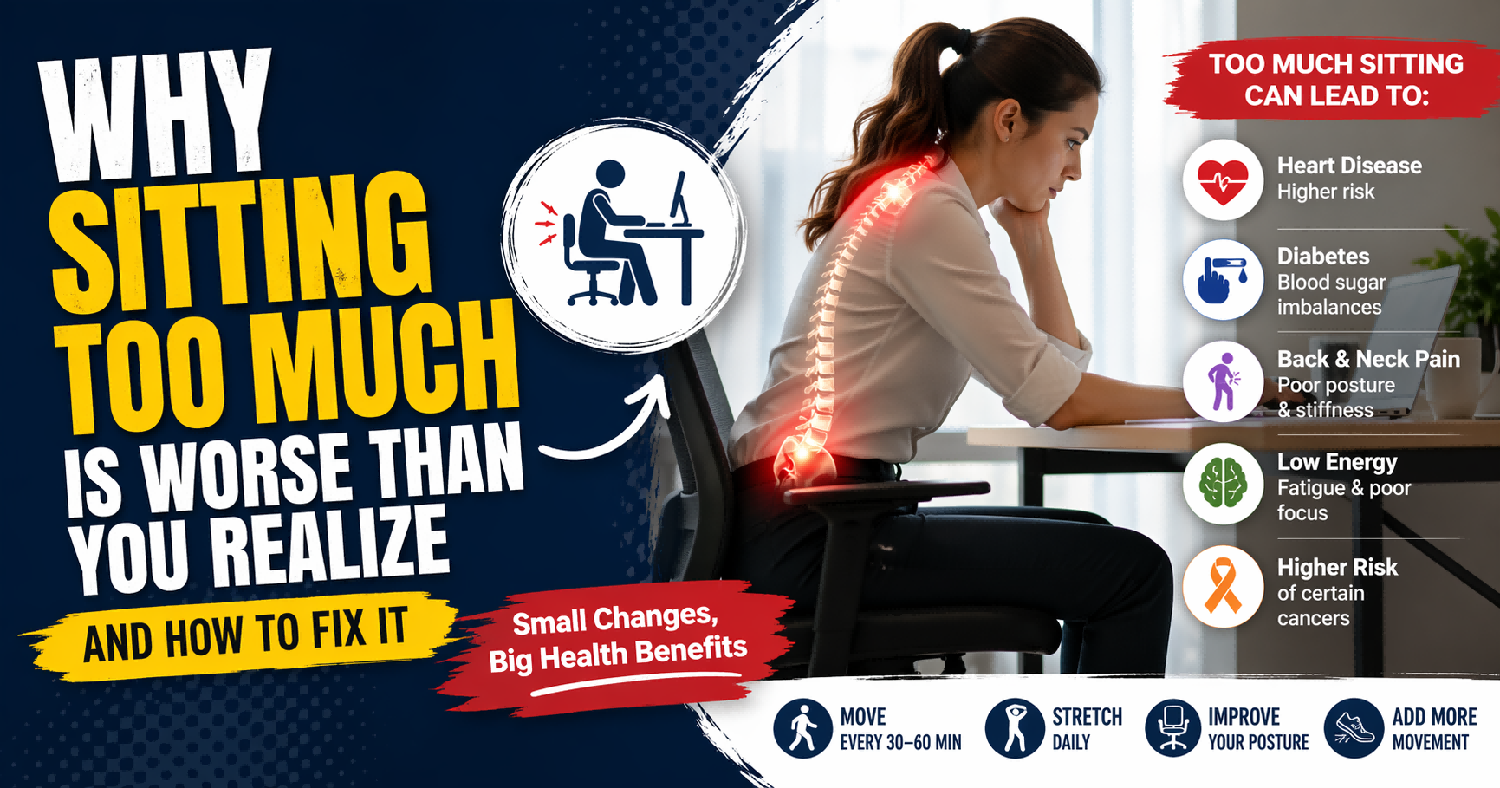
In today’s digital world, sitting has quietly become one of the most common—and underestimated—health risks. Whether you’re working at a desk, commuting, or relaxing at home, hours can pass without much movement. While it may seem harmless, prolonged sitting can have serious effects on your body and overall well-being.
This article continues our exploration of everyday habits that impact your health. If you’ve ever felt stiff, tired, or unfocused after sitting too long, your body is already signaling that something isn’t right.
The Hidden Impact of a Sedentary Lifestyle
Sitting for extended periods slows down your metabolism. This means your body burns fewer calories, processes fats less efficiently, and struggles to regulate blood sugar levels. Over time, these changes can increase the risk of weight gain, type 2 diabetes, and even heart disease.
What makes it worse is that regular exercise alone doesn’t fully offset long hours of sitting. You might go to the gym for an hour, but if you remain seated for the rest of the day, your body still experiences the negative effects.
Your Posture Pays the Price
When you sit for too long—especially with poor posture—your spine and muscles begin to suffer. Common issues include:
- Tight hip flexors
- Lower back pain
- Rounded shoulders
- Forward head posture
Over time, these imbalances can lead to chronic pain and reduced mobility. Even small posture mistakes, repeated daily, can compound into long-term problems.
Sitting Drains Your Energy
Ironically, doing less movement can make you feel more tired. Sitting for long stretches reduces blood circulation, meaning less oxygen reaches your muscles and brain. This often results in:
- Brain fog
- Reduced focus
- Afternoon fatigue
- Lower productivity
If you find yourself feeling sluggish during the day, your chair might be part of the problem.
The Long-Term Health Risks
Research has linked excessive sitting with several serious health concerns:
- Increased risk of cardiovascular disease
- Higher chances of developing type 2 diabetes
- Poor circulation, especially in the legs
- Increased risk of certain cancers
- Shortened lifespan
While these risks develop over time, the daily habit of prolonged sitting plays a significant role.
Small Changes That Make a Big Difference
The good news? You don’t need a complete lifestyle overhaul to reduce the effects of sitting. Simple adjustments can go a long way.
1. Follow the 30–60 Minute Rule
Stand up, stretch, or walk around every 30 to 60 minutes. Even a short break helps reset your body.
2. Improve Your Workspace
Set up your desk so your screen is at eye level, your back is supported, and your feet rest flat on the floor.
3. Add Movement to Your Routine
Take phone calls while walking, use stairs instead of elevators, or try a standing desk for part of your day.
4. Stretch Daily
Focus on opening up your hips, shoulders, and chest to counteract the effects of sitting.
A Simple Mindset Shift
Instead of thinking, “I need to exercise more,” start thinking, “I need to sit less.” Movement doesn’t have to be intense to be effective. Frequent, small actions throughout the day can protect your health far more than you might expect.
Final Thoughts
Sitting is unavoidable in modern life—but excessive sitting doesn’t have to be. By becoming more aware of how long you stay seated and making small, intentional changes, you can significantly improve your energy, posture, and long-term health.
Your body was designed to move. The more you honor that, the better you’ll feel—both now and in the future.


