

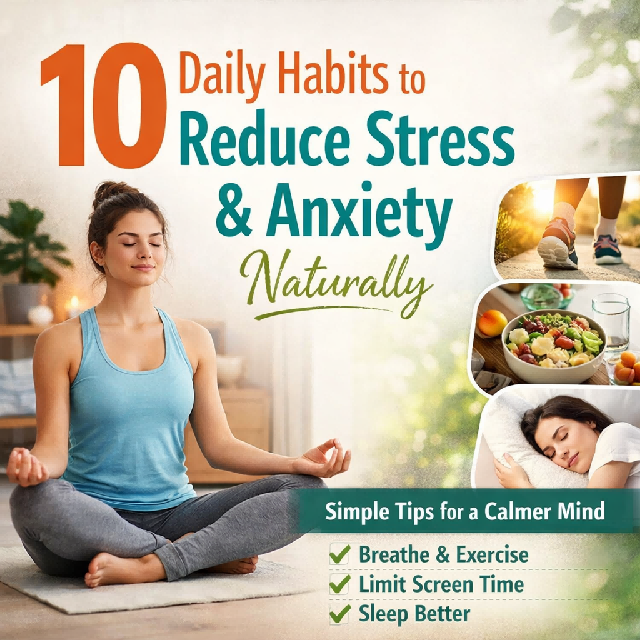
In today’s fast-paced world, stress and anxiety have become common experiences for many people. Work pressure, social media, financial worries, and daily responsibilities can easily overwhelm the mind. The good news is that small daily habits can make a big difference in improving your mental well-being.
You don’t need drastic lifestyle changes to feel calmer and more balanced. Simple, consistent habits can help reduce stress, improve mood, and strengthen emotional resilience. Here are 10 daily habits that can help you reduce stress and anxiety naturally.
1. Start Your Day with Deep Breathing
Before checking your phone or rushing into your daily tasks, take a few minutes to breathe deeply. Deep breathing helps calm the nervous system and reduces the body’s stress response.
Try this simple exercise:
- Inhale slowly through your nose for 4 seconds
- Hold your breath for 4 seconds
- Exhale slowly through your mouth for 6 seconds
- Repeat for 3–5 minutes
This practice can immediately help you feel more relaxed and focused.
2. Get Moving Every Day
Physical activity is one of the most effective ways to reduce stress and anxiety. Exercise releases endorphins, often called the “feel-good hormones.”
You don’t need intense workouts. Simple activities can help:
- Walking for 20 minutes
- Stretching or yoga
- Light home workouts
- Cycling or jogging
Even a short daily workout can improve mood and reduce tension.
3. Limit Social Media Consumption
Constant exposure to news, notifications, and social media can increase stress levels. Comparing yourself to others online can also affect self-esteem.
Try setting boundaries such as:
- Checking social media only a few times per day
- Turning off unnecessary notifications
- Avoiding screens before bedtime
Reducing digital overload can create a calmer mind.
4. Practice Gratitude
Gratitude helps shift your focus from problems to positive aspects of life. Studies show that people who regularly practice gratitude tend to experience less stress and more happiness.
A simple habit is keeping a gratitude journal. Every day, write down three things you’re thankful for. They can be small things like:
- A good meal
- A supportive friend
- A beautiful sunset
Over time, this practice trains your mind to notice more positive moments.
5. Maintain a Healthy Sleep Routine
Poor sleep can significantly increase stress and anxiety. Adults generally need 7–9 hours of sleep each night to function well.
To improve sleep quality:
- Go to bed and wake up at the same time daily
- Avoid caffeine late in the day
- Keep your bedroom dark and quiet
- Limit screen time before bed
Better sleep leads to better emotional balance.


