

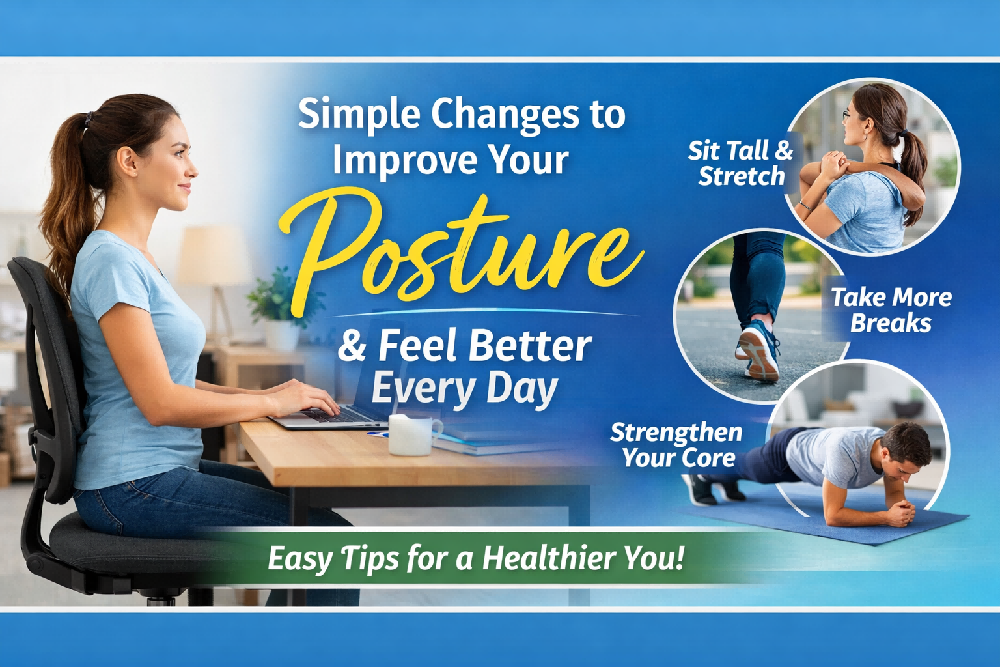
Poor posture can sneak into your life without you even noticing. It often starts with small habits: looking down at your phone, hunching over a laptop, sitting too long, or standing with your weight unevenly shifted. Over time, those habits can lead to tight shoulders, neck pain, lower back discomfort, headaches, and even low energy.
The good news is that improving your posture does not require a complete lifestyle overhaul. In most cases, small daily changes can make a big difference. You do not need to be perfect, and you do not need expensive equipment. You just need a little awareness, a few better habits, and consistency.
Here are simple, realistic ways to improve your posture and feel better every day.
Why Posture Matters
Good posture is more than just standing up straight. It helps your body move the way it was designed to move. When your head, shoulders, spine, and hips are in better alignment, your muscles do not have to work as hard to support you. This can reduce unnecessary strain and make everyday activities feel easier.
Better posture may help with:
- Reducing neck and back tension
- Improving breathing
- Supporting balance and mobility
- Lowering fatigue during the day
- Helping you look and feel more confident
Posture is not about being stiff like a robot. It is about creating a natural, balanced position that supports comfort and movement.
1. Check Your Head Position
One of the most common posture problems today is “forward head posture.” This happens when your head moves in front of your shoulders, usually from spending too much time looking at screens.
A simple way to correct this is to imagine a string gently pulling the top of your head upward. Your chin should stay level, not tilted up or tucked too far down. Your ears should line up more closely with your shoulders.
Try this quick reset a few times a day:
Stand or sit tall.
Relax your shoulders.
Gently pull your chin straight back.
Hold for five seconds, then release.
This small move can help train your neck into a better position over time.
2. Relax Your Shoulders
Many people carry tension in their shoulders without realizing it. If your shoulders are constantly lifted or rounded forward, your upper body can feel tight and tired.
Instead of forcing your chest out, think about gently rolling your shoulders up, back, and down. Then let them relax. The goal is not to squeeze your shoulder blades hard all day. It is simply to avoid the slouched, collapsed position that often develops during desk work.
A good reminder is this: shoulders should feel open, not rigid.
3. Adjust Your Workstation
Your desk setup has a major impact on your posture. Even a good posture habit can fall apart if your screen is too low or your chair does not support your body properly.
Here are a few simple adjustments:
Your screen should be close to eye level so you are not constantly looking down.
Your feet should rest flat on the floor.
Your knees should be around hip level.
Your elbows should stay close to your sides while typing.
Your back should be supported, especially your lower back.
If you work on a laptop, consider using a stand or a stack of books to raise the screen. A separate keyboard and mouse can also help create a more comfortable position.
4. Stop Sitting for Too Long
Even perfect sitting posture is not ideal if you stay in one position for hours. The body likes movement. Long periods of sitting can tighten the hips, weaken certain muscles, and increase back stiffness.
One of the easiest ways to improve posture is to take short movement breaks during the day. Stand up, stretch, walk to get water, or simply move around for a minute or two.
A helpful habit is to get up at least once every 30 to 60 minutes. Set a timer if needed. These small breaks can reduce stiffness and help you reset your posture before discomfort builds up.
5. Strengthen Your Core
Your core is not just about visible abs. It includes the muscles around your abdomen, lower back, and pelvis that help stabilize your body. When these muscles are weak, it can be harder to maintain good posture naturally.
You do not need an intense gym routine. Simple exercises can help, such as:
Planks
Bird-dogs
Glute bridges
Dead bugs
These movements support the muscles that keep your spine more stable. Just a few sessions each week can make everyday posture feel easier and more natural.


