

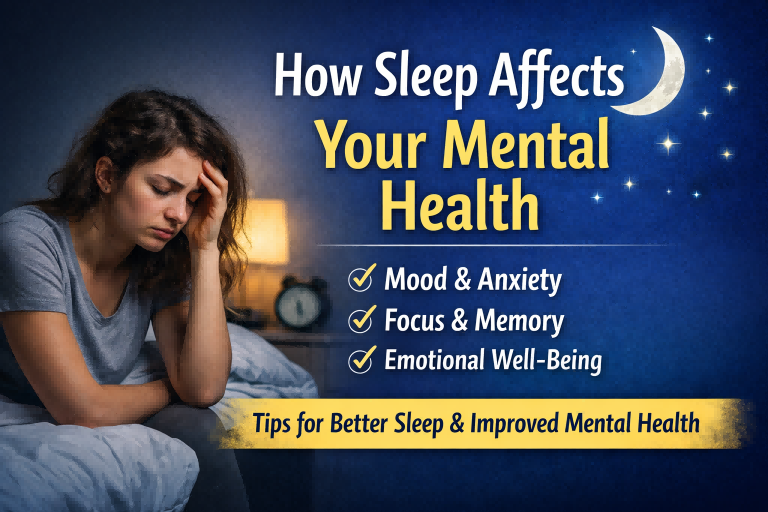
In today’s fast-paced world, sleep often becomes a low priority. Many people sacrifice rest to meet deadlines, scroll through social media, or binge-watch their favorite shows. However, what we often overlook is that sleep is not a luxury—it’s a necessity. In fact, the quality and quantity of your sleep play a crucial role in shaping your mental health.
If you’ve ever felt irritable, anxious, or mentally drained after a poor night’s sleep, you’ve already experienced this connection firsthand. In this article, we’ll explore how sleep affects your mental health, why it matters, and how you can improve both for a healthier, happier life.
The Powerful Connection Between Sleep and Mental Health
Sleep and mental health are deeply interconnected. Poor sleep can negatively impact your mood, thinking, and emotional stability, while mental health issues can also disrupt your sleep patterns. This creates a cycle that can be difficult to break.
When you sleep, your brain is actively working to process emotions, consolidate memories, and restore cognitive function. Without enough rest, these essential processes are disrupted. Over time, this can lead to increased stress, difficulty concentrating, and even long-term mental health challenges.
Research shows that people who consistently get insufficient sleep are more likely to experience conditions such as anxiety, depression, and mood disorders. On the flip side, improving sleep habits can significantly boost emotional resilience and overall mental well-being.
How Lack of Sleep Impacts Your Mood
One of the most immediate effects of poor sleep is a change in mood. Even one night of inadequate sleep can make you feel:
- Irritable or short-tempered
- Easily overwhelmed
- Less patient with others
- Emotionally sensitive
This happens because sleep deprivation affects the brain’s ability to regulate emotions. The amygdala, which is responsible for processing emotions like fear and anger, becomes more reactive when you’re sleep-deprived. At the same time, the prefrontal cortex—responsible for rational thinking—becomes less effective.
The result? You’re more likely to overreact to small problems and struggle to stay calm under pressure.
Sleep and Anxiety: A Two-Way Street
Sleep and anxiety have a bidirectional relationship. Poor sleep can increase anxiety levels, and anxiety can make it harder to fall asleep or stay asleep.
When you don’t get enough rest, your body produces higher levels of stress hormones like cortisol. This keeps your mind in a state of alertness, making it difficult to relax. Over time, chronic sleep deprivation can lead to persistent feelings of worry and tension.
On the other hand, if you’re already dealing with anxiety, your racing thoughts may prevent you from getting restful sleep. This creates a vicious cycle that can be hard to escape without intentional changes.
The Link Between Sleep and Depression
Sleep problems are closely linked to depression. In fact, insomnia is one of the most common symptoms of depressive disorders.
People who don’t get enough sleep may experience:
- Persistent sadness
- Loss of motivation
- Difficulty focusing
- Low energy levels
Sleep deprivation affects neurotransmitters like serotonin and dopamine, which play key roles in regulating mood. When these chemicals are out of balance, it becomes harder to maintain emotional stability.
Interestingly, improving sleep quality has been shown to reduce symptoms of depression. This highlights how essential sleep is in maintaining mental health.
Cognitive Function and Mental Clarity
Sleep doesn’t just affect your emotions—it also impacts how you think. When you’re well-rested, your brain functions more efficiently. You can focus better, make decisions more easily, and solve problems effectively.
On the other hand, lack of sleep can lead to:
- Poor concentration
- Memory problems
- Slower reaction times
- Reduced creativity
This cognitive decline can increase frustration and stress, further affecting your mental health. Over time, it may even impact your performance at work or school, adding another layer of pressure to your daily life.


