

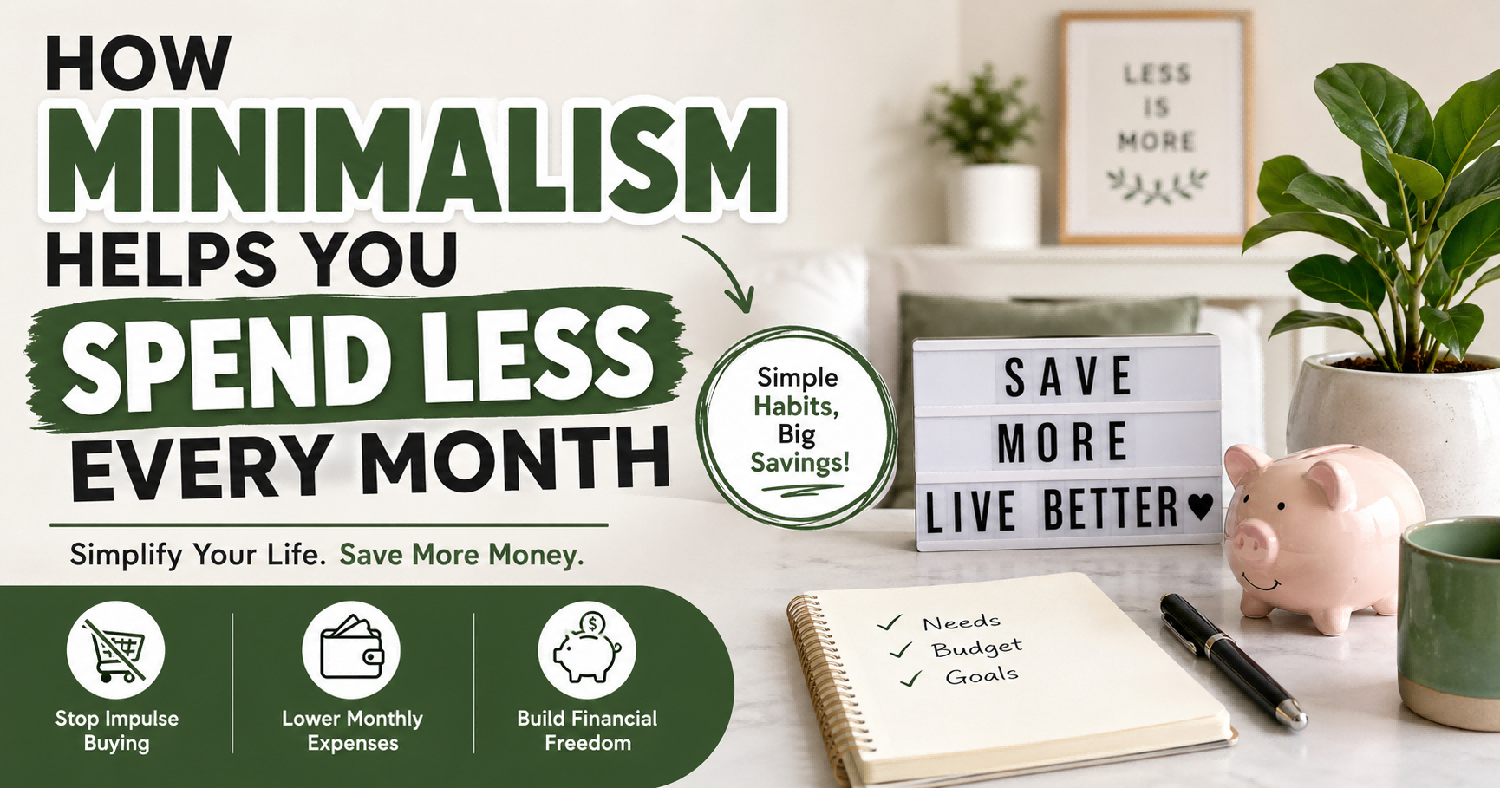
In today’s consumer-driven world, it’s easy to spend money without even realizing it. Subscriptions, impulse purchases, and lifestyle upgrades quietly drain your bank account month after month.
Minimalism offers a different path.
By focusing on what truly matters and eliminating unnecessary expenses, minimalism helps you take control of your finances and significantly reduce your monthly spending—without feeling deprived.
1. You Stop Buying Things You Don’t Need
One of the biggest reasons people overspend is impulse buying.
Minimalism encourages you to pause and think before every purchase:
- Do I actually need this?
- Will this improve my life long-term?
This shift alone can dramatically reduce:
- Unnecessary online shopping
- Emotional spending
- Credit card debt
Over time, you’ll notice that you’re buying less—but feeling more satisfied.
2. Your Monthly Expenses Become Easier to Control
When you own fewer things, your financial life becomes simpler.
Instead of juggling multiple expenses, you start to:
- Track your spending more easily
- Identify wasteful habits
- Stick to a realistic budget
Many people find that using budgeting apps or expense tracking tools helps reinforce this habit. These tools make it easier to see exactly where your money is going and where you can cut back.
3. You Spend Less on Maintenance and Replacements
More stuff doesn’t just cost money to buy—it costs money to maintain.
When you simplify your home, you naturally reduce:
- Repair and replacement costs
- Cleaning supplies and effort
- Storage expenses
A minimalist home is not only easier to manage—it’s also much cheaper to maintain over time.
4. You Avoid Lifestyle Inflation
As your income increases, it’s tempting to upgrade everything—your home, your car, your daily habits.
This is known as lifestyle inflation.
Minimalism helps you resist this pattern by focusing on:
- Value over status
- Function over appearance
- Long-term benefits over short-term pleasure
Instead of constantly upgrading, you become more intentional with your spending—saving hundreds or even thousands of dollars each year.
5. You Cut Unnecessary Subscriptions and Hidden Costs
Small recurring expenses often go unnoticed—but they add up quickly.
Minimalism encourages regular financial check-ins, helping you:
- Cancel unused subscriptions
- Eliminate duplicate services
- Reduce hidden monthly fees
Some people even discover they are paying for services they haven’t used in months.
By simplifying your financial commitments, you create immediate monthly savings.
6. You Make Smarter Financial Decisions
Minimalism shifts your mindset from automatic spending to intentional decision-making.
Instead of buying quickly, you start to:
- Compare options carefully
- Invest in quality over quantity
- Think long-term
This often leads people to explore better financial habits, such as:
- Using personal finance tools
- Planning long-term savings goals
- Seeking guidance from financial planning services
These small changes can significantly improve how you manage money over time.
7. You Build a Stronger Financial Future
When you consistently spend less than you earn, everything changes.
You gain the ability to:
- Build an emergency fund
- Pay off debt faster
- Invest for the future
Some people even consider structured solutions like debt relief programs to accelerate their progress and regain financial control.
Minimalism doesn’t just reduce your expenses—it creates space for financial growth.
8. You Focus on What Truly Adds Value to Your Life
Minimalism is not about restriction—it’s about clarity.
Instead of spending money on things that don’t matter, you begin to prioritize:
- Experiences
- Health and well-being
- Personal growth
This shift reduces wasteful spending while increasing overall satisfaction.
In the end, you’re not just saving money—you’re improving your quality of life.
Final Thoughts
Minimalism helps you spend less every month by changing how you think about money.
By reducing unnecessary purchases, simplifying your lifestyle, and making more intentional decisions, you naturally lower your expenses without feeling like you’re missing out.
The result is simple:
less stress, more savings, and greater financial freedom.
Frequently Asked Questions
Can minimalism really help you save money?
What is the fastest way to cut monthly expenses?
More Helpful Reads
Looking for more ideas, better habits, or a fresh perspective? Start here.- Minimalism vs. Frugal Living: What’s the Difference — and Which Lifestyle Fits You Best?
- 40 Minimalist Kitchens With Maximum Style
- How Living with Less Can Save You Thousands Every Year


