

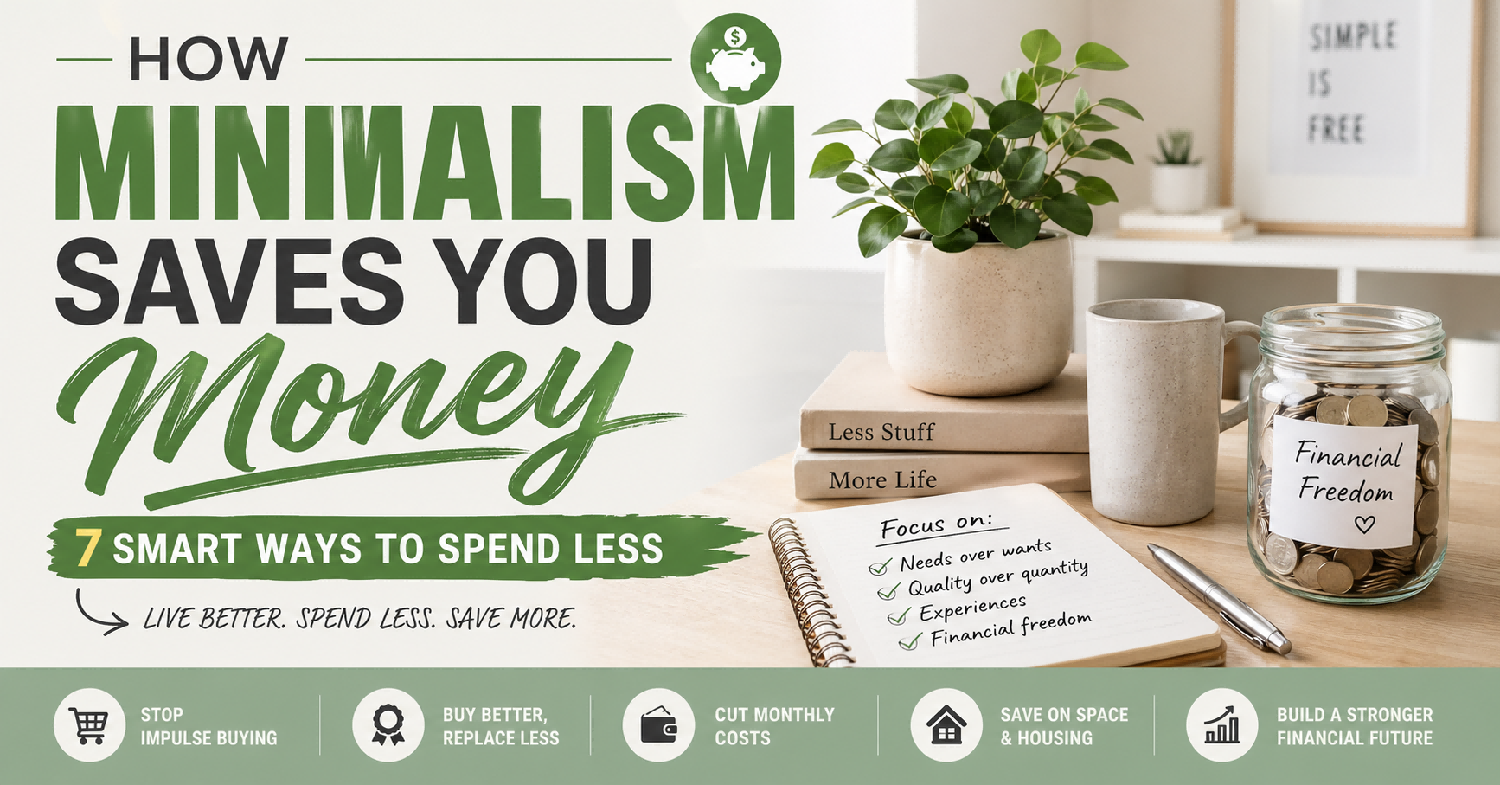
In a world driven by constant consumption, minimalism offers a refreshing alternative—not just for mental clarity, but also for your wallet. By focusing on what truly matters and eliminating excess, minimalism naturally leads to smarter spending, reduced financial stress, and long-term savings.
If you’ve ever wondered how owning less can actually give you more, this guide breaks it down.
Minimalism isn’t about less—it’s about saving more.
What Is Minimalism, Really?
Minimalism isn’t about living with nothing—it’s about living with intention. It means choosing quality over quantity, prioritizing needs over wants, and being mindful about every purchase you make.
Instead of chasing trends or accumulating clutter, minimalists focus on value, purpose, and longevity.
1. You Stop Impulse Buying
One of the biggest money drains today is impulse spending—those unplanned purchases that add up quickly.
Minimalism encourages you to pause and ask:
- Do I really need this?
- Will this add value to my life?
Over time, this habit dramatically reduces unnecessary spending.
Result: More money stays in your bank account without feeling deprived.
2. You Buy Higher Quality (and Replace Less)
Minimalists often invest in fewer, better things. Instead of buying cheap items repeatedly, they choose durable, long-lasting products.
For example:
- A well-made jacket that lasts 5 years
- A sturdy kitchen tool instead of disposable gadgets
Result: Lower long-term costs and fewer replacements.
3. You Reduce Subscription and Hidden Costs
Modern life is full of silent expenses:
- Streaming services
- App subscriptions
- Monthly memberships
Minimalism pushes you to audit these costs and keep only what you truly use.
Result: Hundreds (or even thousands) saved every year.
4. You Save on Storage and Space
Owning less means needing less space.
That can translate to:
- Smaller living areas
- Lower rent or mortgage
- No need for storage units
Result: Reduced housing and storage expenses—one of the biggest financial wins.
5. You Avoid Trend-Based Spending
Trends come and go—and they’re expensive to keep up with.
Minimalism shifts your focus to timeless, versatile items instead of constantly updating your wardrobe or gadgets.
Result: Fewer purchases and more consistent savings over time.
6. You Become More Financially Aware
Minimalism naturally leads to better money habits:
- Tracking spending
- Setting priorities
- Avoiding financial clutter
You begin to align your spending with your values.
Result: Smarter decisions and greater financial control.
7. You Focus on Experiences, Not Stuff
Minimalists often spend less on material goods and more on meaningful experiences—like travel, learning, or time with loved ones.
Interestingly, this shift often reduces overall spending while increasing satisfaction.
Result: Better life quality without overspending.
Simple Ways to Start Saving with Minimalism
You don’t need to overhaul your life overnight. Start small:
- Try a “no-buy week” to reset spending habits
- Declutter one room and notice what you don’t miss
- Cancel 1–2 unused subscriptions today
- Wait 24 hours before any non-essential purchase
These simple steps can create immediate financial impact.
Final Thoughts
Minimalism isn’t about restriction—it’s about freedom. By owning less and spending intentionally, you create space not just in your home, but in your finances.
Over time, the savings compound—and so does your peace of mind.
Less really can be more.
Frequently Asked Questions
Does minimalism really save money?
What are the biggest ways minimalism saves money?
Can minimalism help with budgeting?
Is minimalism expensive to start?
More Helpful Reads
Looking for more ideas, better habits, or a fresh perspective? Start here.- How Minimalist Living Helps You Save Money Every Month
- 8 Minimalist Habits That Cut Your Monthly Expenses Fast
- 10 Minimalist Habits to Eliminate Decision Fatigue Fast


