

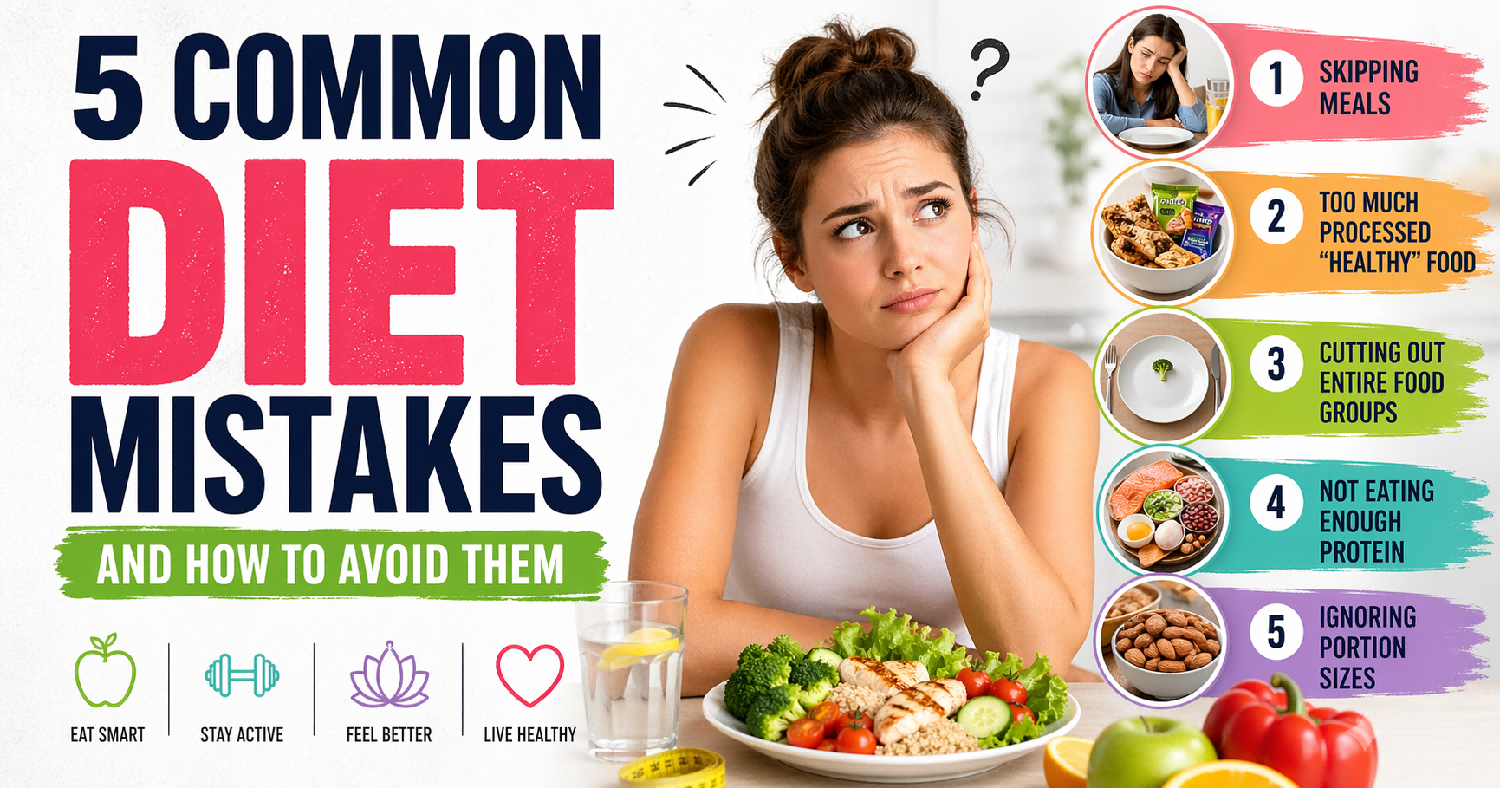
Eating healthy sounds simple—but in reality, many people fall into common diet traps that slow down progress, drain energy, and even harm long-term health. The good news? Most of these mistakes are easy to fix once you recognize them.
If you’re trying to lose weight, improve your energy, or simply feel better every day, avoiding these diet mistakes can make a huge difference.
1. Skipping Meals to “Save Calories”
Why it’s a problem:
Skipping meals—especially breakfast or lunch—can slow your metabolism and lead to overeating later in the day. Your body goes into “energy-saving mode,” making it harder to burn calories efficiently.
What to do instead:
- Eat regular, balanced meals (3 meals + 1–2 snacks)
- Focus on protein + fiber to stay full longer
- Don’t let yourself get overly hungry
👉 Pro tip: Consistency matters more than cutting calories aggressively.
2. Relying Too Much on “Healthy” Processed Foods
Why it’s a problem:
Many “low-fat,” “sugar-free,” or “high-protein” products are still highly processed and packed with hidden sugars, sodium, or artificial ingredients.
What to do instead:
- Choose whole foods whenever possible
- Read ingredient lists (shorter is better)
- Limit packaged snacks—even if they look healthy
👉 Better swaps:
- Protein bar → Greek yogurt + fruit
- Packaged juice → Whole fruit
- Diet snacks → Nuts or boiled eggs
3. Cutting Out Entire Food Groups
Why it’s a problem:
Eliminating carbs, fats, or other major food groups can lead to nutrient deficiencies and make your diet unsustainable.
What to do instead:
- Aim for a balanced diet (carbs + protein + healthy fats)
- Choose quality sources (whole grains, lean protein, healthy fats)
- Avoid extreme diet trends
👉 Remember: Balance beats restriction every time.
4. Not Eating Enough Protein
Why it’s a problem:
Protein helps control hunger, supports muscle, and boosts metabolism. Without enough protein, you may feel hungry more often and lose muscle instead of fat.
What to do instead:
- Include protein in every meal
- Aim for sources like eggs, chicken, fish, beans, tofu, or yogurt
- Start your day with a protein-rich breakfast
👉 Simple rule: If your meal is mostly carbs, add protein.
5. Ignoring Portion Sizes
Why it’s a problem:
Even healthy foods can lead to weight gain if you eat too much. Nuts, oils, and even “clean meals” can be calorie-dense.
What to do instead:
- Use smaller plates
- Pay attention to hunger and fullness cues
- Avoid eating straight from packages
👉 Mindful eating tip: Slow down—your brain needs time to register fullness.
Final Thoughts
Healthy eating isn’t about perfection—it’s about making smarter, sustainable choices over time. By avoiding these common diet mistakes, you can:
- Boost your energy
- Improve your metabolism
- Build long-term healthy habits
Start small. Fix one habit at a time, and you’ll see real results.
Frequently Asked Questions
What is the most common diet mistake?
Can healthy foods still cause weight gain?
How can I improve my diet easily?
Is cutting carbs a good idea?
More Helpful Reads
Looking for more ideas, better habits, or a fresh perspective? Start here.- 10 Stress Symptoms You Should Never Ignore (Hidden Health Risks)
- 9 Small Wellness Habits That Can Transform Your Health Over Time
- Build a Healthy Routine Without Stress: Easy Habits That Actually Stick


