

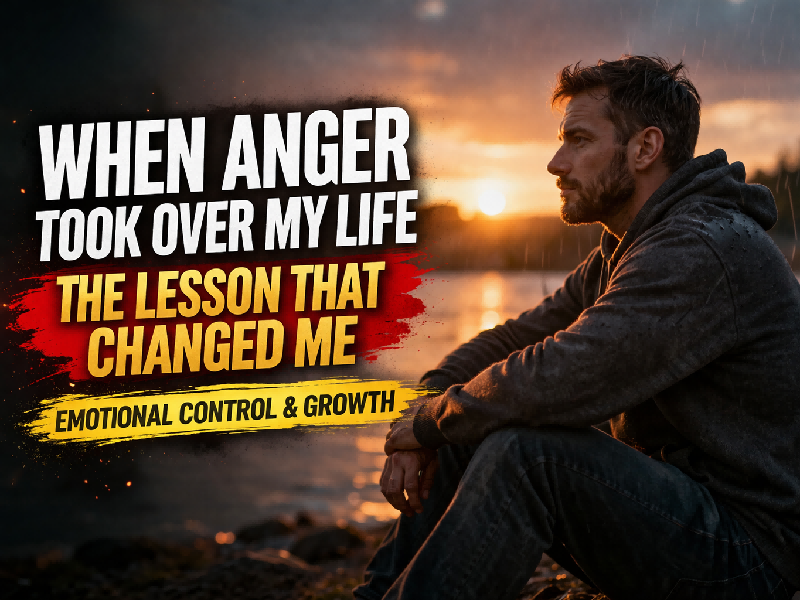
I didn’t realize how much anger was controlling me until it nearly cost me everything.
For a long time, I told myself I was just “passionate.” That I cared deeply. That my reactions were justified. But the truth was harder to admit: I didn’t know how to control my emotions—and anger had quietly taken the lead.
This is the story of how I lost control… and what it took to finally take it back.
The Day Everything Boiled Over
It happened on a Tuesday afternoon.
Nothing extraordinary—just a stressful workday, a few missed deadlines, and a short message from a coworker that felt sharper than it probably was.
“Did you forget to update the report again?”
That was it. Just one sentence.
But in my mind, it exploded.
My chest tightened. My thoughts raced. Before I even paused to breathe, I fired back a long, defensive reply. Then another. And another. Each message more emotional than the last.
Within minutes, what should have been a small clarification turned into a full-blown conflict.
By the end of the day, my manager had pulled me aside.
“Your reaction felt… disproportionate,” she said gently.
I remember feeling embarrassed—but also angry. Angry that no one understood me. Angry that I was being blamed.
Looking back now, I see something I couldn’t see then:
It wasn’t about the message.
It was about me.
When Anger Becomes a Habit
Anger doesn’t always show up as shouting or breaking things.
Sometimes, it’s quieter. It’s sarcasm. Irritability. Tension that lingers long after a conversation ends.
And for me, it had become a pattern.
- I overreacted to small inconveniences
- I assumed the worst in people’s intentions
- I replayed arguments in my head for hours
- I felt drained, but also strangely justified
It took me a while to realize that anger had become my default response—not because everything was wrong, but because I didn’t know how to process what I was feeling.
Underneath the anger was something else:
Stress. Insecurity. Fear of being judged.
But anger was easier to express.


