

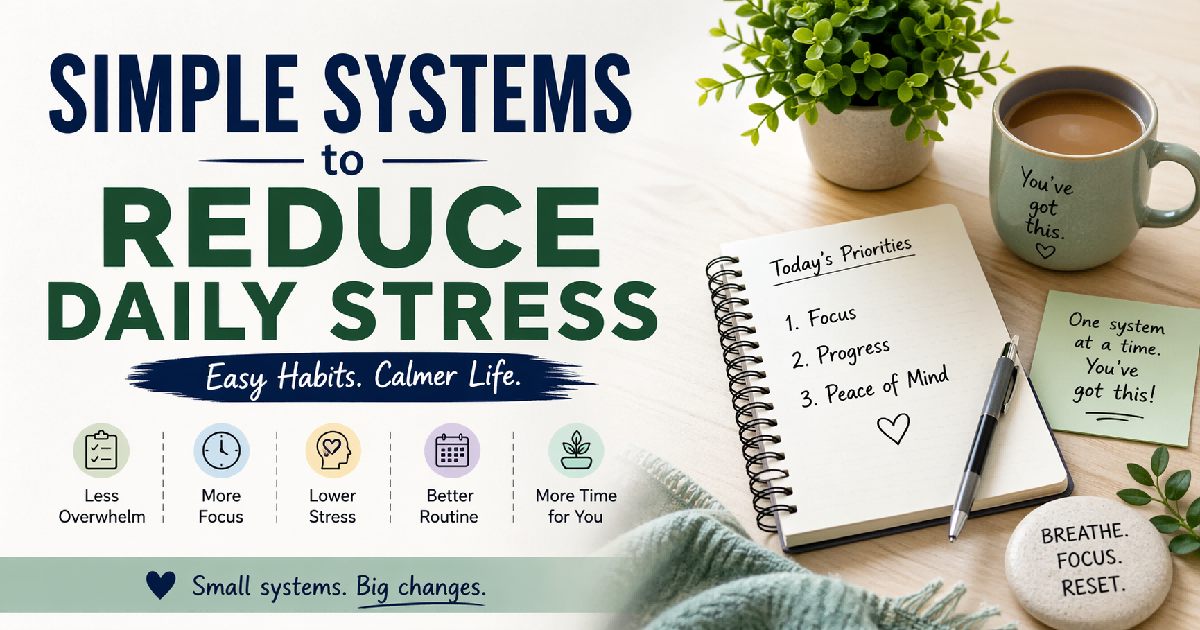
What are simple systems to reduce daily stress?
Simple systems are small, repeatable routines like prioritizing 3 tasks, organizing your day, and reducing decisions. They help lower stress by creating structure and clarity in daily life.
Modern life isn’t just busy—it’s mentally exhausting. Between constant notifications, endless to-do lists, and unexpected interruptions, stress can quietly build up until it feels overwhelming.
But here’s the truth: you don’t need a complete life overhaul to feel better. What you need are simple, repeatable systems that remove friction from your daily routine.
This article is a continuation of our Life Hacks Lab series, where we focus on practical systems that actually work—not just ideas that sound good.
Let’s break down a few powerful systems you can implement today to reduce daily stress.
1. The “Default Day” System
One of the biggest sources of stress is decision fatigue.
Instead of deciding everything from scratch every day, create a default structure for your routine.
Example:
- Wake up → Drink water → 10-minute stretch
- Work blocks → 90 minutes focused + 15-minute break
- Evenings → Light cleanup + plan tomorrow
You’re not removing flexibility—you’re reducing unnecessary decisions.
👉 Why it works: Your brain uses less energy, leaving more mental space for important tasks.
2. The 3-Task Priority Rule
Long to-do lists create anxiety. You feel busy but not productive.
Instead, limit your daily focus to just three high-impact tasks.
How to apply it:
- Every morning (or the night before), write down:
- Most important task
- Second priority
- Third priority
Everything else is optional.
👉 Why it works: It creates clarity and prevents overwhelm.
3. The “2-Minute Reset” Habit
Clutter—both physical and digital—adds hidden stress.
The solution? A simple reset system.
The rule:
If something takes less than 2 minutes, do it immediately.
Examples:
- Wash a plate right after eating
- Reply to a short email
- Put items back where they belong
👉 Why it works: Small actions prevent stress from accumulating.
4. The “Capture Everything” System
Trying to remember everything is exhausting.
Instead, build a system where nothing stays in your head.
Tools you can use:
- Notes app (phone)
- Google Keep / Notion
- Simple notebook
Whenever something pops up—ideas, tasks, reminders—write it down immediately.
👉 Why it works: It reduces mental clutter and anxiety.
5. The Time Blocking Framework
Unstructured time leads to procrastination and stress.
Time blocking gives your day a clear structure.
Simple version:
- Morning → Deep work
- Afternoon → Meetings / lighter tasks
- Evening → Personal time
You don’t need a perfect schedule—just a basic framework.
👉 Why it works: It eliminates the “What should I do next?” feeling.


