

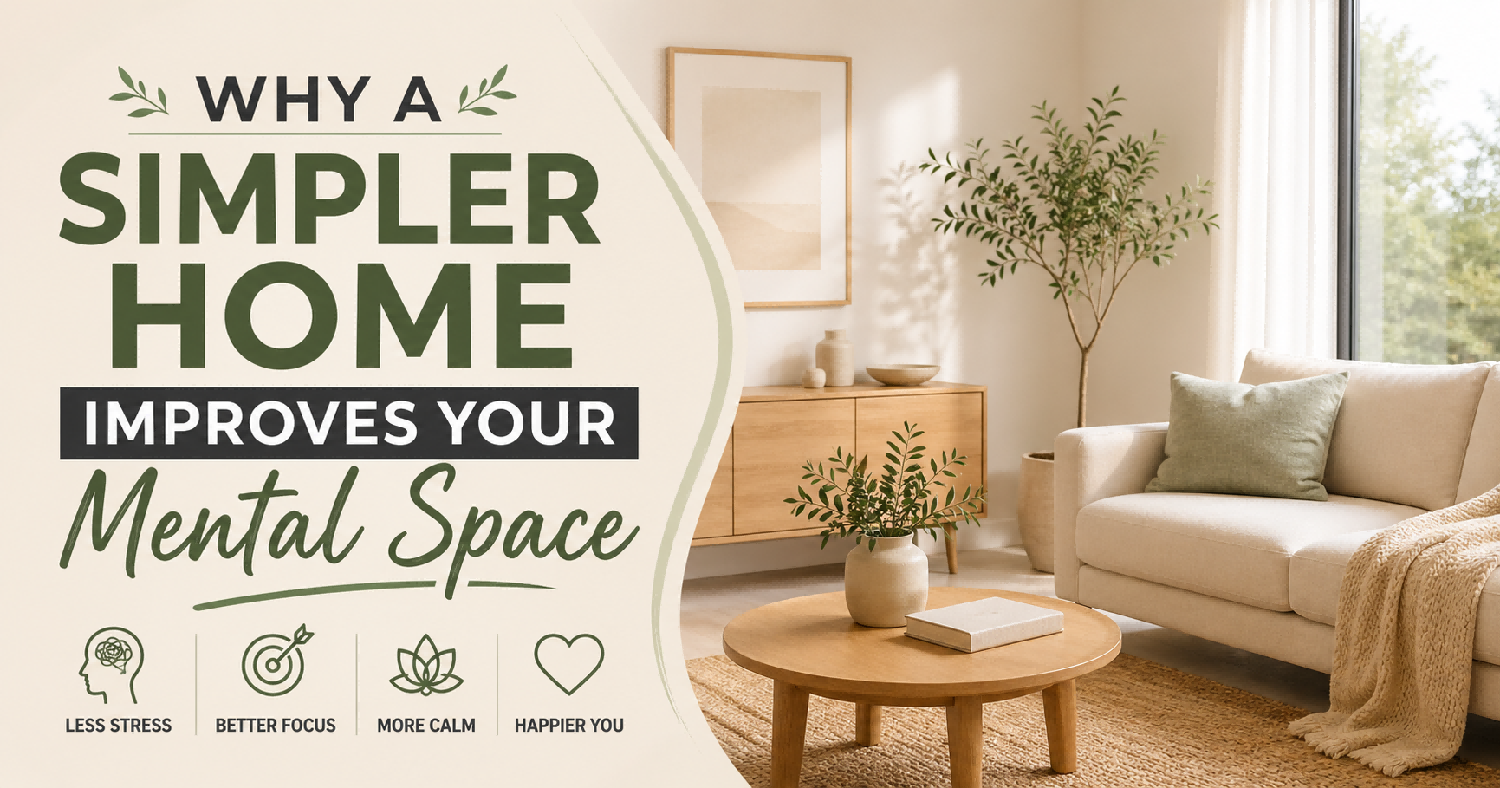
What are the mental benefits of a simpler home?
A simpler home reduces stress, improves focus, and creates a sense of calm. By removing clutter and visual distractions, your brain can process information more efficiently, leading to better mental clarity and emotional balance.
In a world filled with constant noise, digital distractions, and endless to-do lists, your home should be the one place that restores your mind—not drains it. Yet for many people, their living space is a hidden source of stress.
A simpler home isn’t just about aesthetics or minimalism trends. It’s about creating an environment that supports clarity, calm, and mental well-being. When your space is lighter, your mind often follows.
The Hidden Link Between Clutter and Mental Overload
Clutter doesn’t just take up physical space—it occupies mental space too.
Every item in your home competes for your attention, even if you’re not consciously aware of it. Over time, this visual noise can lead to:
- Increased stress and anxiety
- Difficulty focusing
- Mental fatigue
- A constant sense of unfinished tasks
Your brain prefers order. When your surroundings are chaotic, your mind has to work harder just to process your environment.
How a Simpler Home Creates Mental Clarity
When you simplify your home, you remove unnecessary stimuli. This creates space—not just physically, but mentally.
Here’s what often changes:
1. Less Visual Distraction
A clean, simple space reduces the number of things your brain needs to process, making it easier to focus and relax.
2. Faster Decision-Making
Fewer belongings mean fewer choices. From what to wear to where things are stored, everything becomes more straightforward.
3. A Sense of Control
A tidy environment gives you a feeling of stability and control, which directly impacts emotional well-being.
4. Easier Rest and Recovery
Your home becomes a place where your mind can truly rest, instead of being subtly overstimulated.
Emotional Benefits of Living with Less
A simpler home doesn’t just change how your space looks—it changes how you feel.
Many people experience:
- Reduced anxiety: Less chaos leads to a calmer mind
- Improved mood: Clean spaces often feel uplifting
- Better sleep: A decluttered bedroom promotes deeper rest
- More presence: You’re less distracted and more grounded
Instead of constantly reacting to your environment, you begin to feel at ease within it.
Small Changes That Make a Big Difference
You don’t need to become a minimalist overnight. Start small and build gradually.
Try this:
- Clear one surface (desk, table, or nightstand)
- Remove items you don’t use weekly
- Keep only what adds value or function
- Create simple storage systems
These small steps can quickly create noticeable mental relief.
Your Home as a Mental Reset Space
Your home should support your well-being—not compete with it.
A simpler space sends a powerful signal to your brain: you are safe, you can slow down, you can breathe.
Over time, this kind of environment helps you think more clearly, feel more balanced, and live more intentionally.
Final Thought
You don’t need more space. You need better space.
When you remove what’s unnecessary, you make room for what truly matters—peace, clarity, and a calmer mind.
Start with one corner, one drawer, or one habit. Your mental space will thank you.
Frequently Asked Questions
Does a clean home really improve mental health?
Why does clutter make me feel overwhelmed?
How can I simplify my home quickly?
Is minimalism good for mental health?
More Helpful Reads
Looking for more ideas, better habits, or a fresh perspective? Start here.- Stop Buying These Items to Save Money and Reduce Stress
- How Minimalist Living Helps You Save Money Every Month
- Minimalist Daily Routine: How to Simplify Your Day and Reduce Stress


