

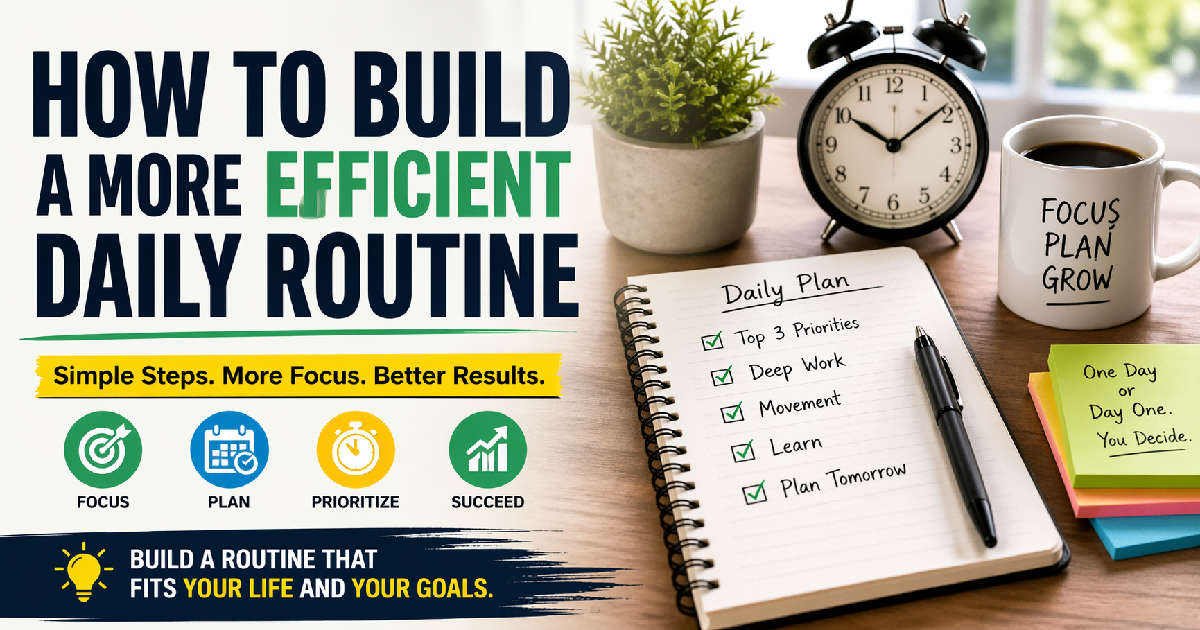
In a world filled with constant distractions, building an efficient daily routine isn’t just a productivity hack—it’s a survival skill. Whether you’re juggling work, side projects, or trying to grow something like a content website, your daily structure determines how far you go.
But here’s the truth: most routines fail because they’re too rigid, unrealistic, or copied from someone else’s life.
In this guide, you’ll learn how to build a daily routine that fits your lifestyle—one that improves focus, saves time, and actually sticks.
Why Most Daily Routines Don’t Work
Before building a better routine, it’s important to understand why so many fail:
- Too complicated: Overloading your day with 20+ tasks
- No flexibility: Life happens, and rigid plans break
- Lack of priorities: Everything feels important, so nothing gets done
- No system for energy management: You plan time, but ignore energy
An efficient routine isn’t about doing more—it’s about doing the right things at the right time.
Step 1: Identify Your High-Impact Activities
Start by asking a simple question:
👉 What 2–3 tasks actually move my life or work forward?
These are your high-impact activities. Everything else is secondary.
For example:
- Writing content (for your website or blog)
- Learning a skill that increases income
- Planning or optimizing your projects
💡 Rule: If your routine doesn’t prioritize these tasks, it’s not efficient.
Step 2: Build Around Energy, Not Just Time
Your energy levels change throughout the day. Most people have:
- Peak focus hours (morning or early afternoon)
- Low-energy periods (after lunch or late evening)
Design your routine like this:
- High-focus tasks → during peak energy
- Light tasks (emails, browsing, admin) → during low energy
This simple shift can double your productivity without working longer.
Step 3: Use Time Blocks (But Keep Them Flexible)
Time blocking is powerful—but only if you don’t treat it like a prison.
Instead of this:
- 9:00–10:00 → Write article (strict)
Try this:
- 9:00–11:00 → Deep Work Block (writing, research, editing)
This way:
- You reduce pressure
- You stay focused longer
- You adapt if something takes more time
Step 4: Create a Simple Morning Anchor
You don’t need a 10-step “perfect morning routine.”
You just need a consistent starting point.
Example:
- Wake up
- Drink water
- Review your top 3 tasks
- Start your first deep work session
That’s it.
A strong morning anchor eliminates decision fatigue and helps you start fast.


