

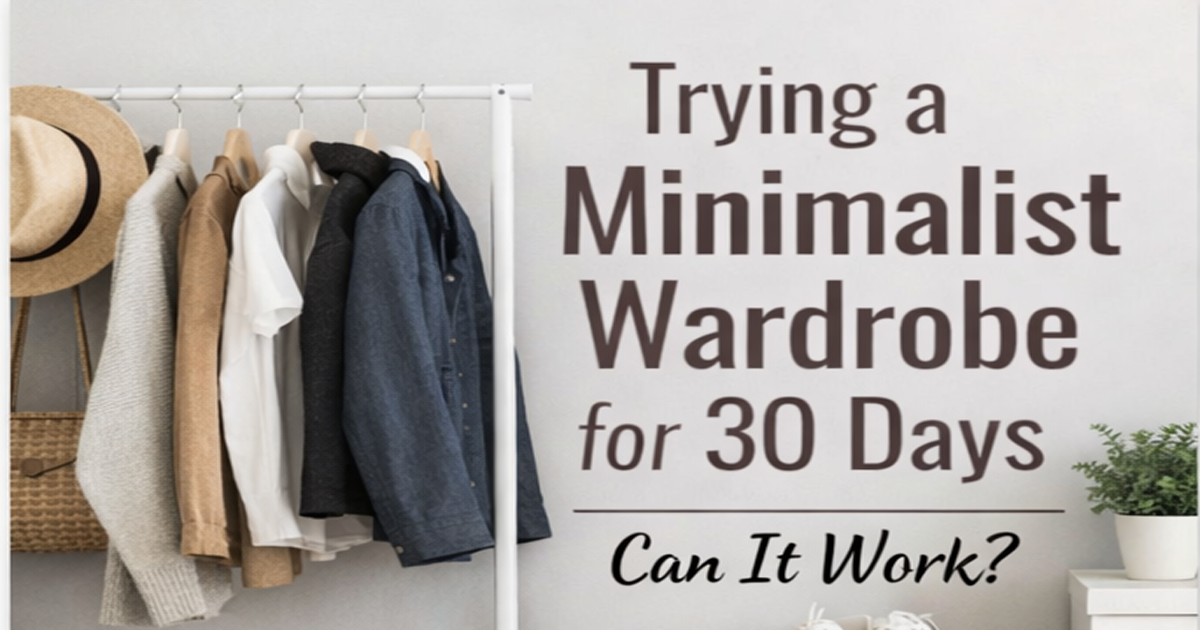
Over the past few years, the concept of minimalism has caught my attention. From decluttering my home to simplifying my schedule, I’ve tried bits and pieces of minimalism in everyday life. But one experiment intrigued me the most: could I really survive—and maybe even thrive—with a minimalist wardrobe for 30 days? I decided to find out.
What Is a Minimalist Wardrobe?
A minimalist wardrobe is exactly what it sounds like: fewer clothes, fewer choices, and a focus on quality over quantity. The goal isn’t to wear the same outfit every day but to build a collection of versatile, comfortable pieces that can mix and match for any occasion. Think neutral colors, timeless designs, and items that suit both work and leisure.
Before starting, I set some rules for myself:
- Only 30 clothing items, including shoes and outerwear.
- No shopping during the 30-day experiment.
- Pieces must be functional, comfortable, and interchangeable.
This meant I had to be ruthless with my wardrobe, letting go of clothes I “might wear someday” and keeping only the items I genuinely loved and wore regularly.
Setting Up the Challenge
The first step was defining what a minimalist wardrobe meant for me. After scrolling through Pinterest boards and lifestyle blogs, I decided on a capsule wardrobe approach: around 30 pieces, including tops, bottoms, dresses, outerwear, and shoes. Accessories were minimal—just a couple of scarves and belts. The idea was to include only versatile pieces I loved wearing, focusing on quality over quantity.
I also set clear rules: no new clothing purchases for 30 days, and I could only wear what was in this capsule. I packed away all the extras in a storage bin. Out went the impulse buys, the “maybe someday” items, and the pieces that had been hanging in my closet for years without being worn.
The First Week: Facing the Challenges
The first week was the hardest. Every morning, I felt like I had fewer options than I was used to. I caught myself thinking, “I don’t have anything to wear!” multiple times. The mental shift was real—going from an overflowing closet to a curated selection made me realize how much decision fatigue I had been experiencing.
But something interesting happened: I started noticing the versatility of the pieces I had chosen. My favorite black jeans paired with three different tops felt like a brand-new outfit each day. Layering and accessorizing became more fun, not less. I also began appreciating the quality of my clothes—soft fabrics, well-made seams, and colors that matched effortlessly.
Week Two: The Unexpected Benefits
By the second week, the mental stress of choosing an outfit had noticeably decreased. Mornings were easier, and I found myself spending less time worrying about what to wear. There was also a surprising boost in confidence. Wearing clothes I actually liked every day made me feel more put-together, even without a huge wardrobe to choose from.
Another unexpected benefit? Laundry. With fewer items, it was easier to manage washing and folding. I no longer had overflowing laundry baskets or mismatched socks. Simple habits like folding clothes and organizing drawers felt more satisfying because everything had its place.
Week Three: Creativity and Style
As the third week rolled in, I discovered a new kind of creativity. When you have a limited wardrobe, you start experimenting with ways to combine items you might never have paired before. Scarves, belts, and layering became tools to create different looks. I realized that less truly could be more—and that style isn’t about how much you own, but how you use what you have.
I also noticed a stronger focus on sustainability. Wearing the same items frequently reminded me of the impact of fast fashion and the waste created by buying trends I didn’t really need. Minimalism became not only a personal experiment but a small step toward more responsible consumption.
The Final Week: Reflection and Results
By the last week of the experiment, the minimalist wardrobe felt normal. In fact, I almost didn’t want to go back to my old closet full of forgotten clothes. I had fewer options, but I felt less overwhelmed, more confident, and surprisingly free.
I learned that a minimalist wardrobe isn’t about restriction—it’s about clarity and intention. I no longer needed to scroll through endless racks or online stores to find something to wear. Every item had a purpose, and every outfit felt deliberate.
Would I Continue With a Minimalist Wardrobe?
Absolutely. While I wouldn’t call myself a strict minimalist, this experiment taught me that having fewer clothes doesn’t limit your style—it enhances it. I’ve decided to slowly maintain a smaller, high-quality wardrobe while being mindful about future purchases. The key takeaway? Minimalism is less about deprivation and more about conscious living.
If you’ve ever felt overwhelmed by your closet, constantly buying new pieces, or stressed by morning outfit decisions, I highly recommend trying a 30-day minimalist wardrobe experiment. You might be surprised at how liberating—and stylish—it can feel.
Final Thoughts:
Trying a minimalist wardrobe for 30 days taught me that less really can be more. It simplified mornings, reduced stress, and helped me appreciate my clothes in a new way. Whether you’re curious about minimalism or just looking for a practical life experiment, this challenge might just change how you see your closet—and maybe even your life.


