

In a world driven by constant consumption, it’s easy to fall into the trap of buying more than you truly need. But what if the secret to a calmer, richer, and more financially stable life isn’t earning more—but buying less?
Minimalism isn’t about deprivation. It’s about intention. By eliminating unnecessary purchases, you not only reduce clutter but also free up money, time, and mental energy. In this guide, we’ll explore what to stop buying to simplify your life—and how these changes can even improve your financial future.
What Should You Stop Buying to Simplify Your Life?
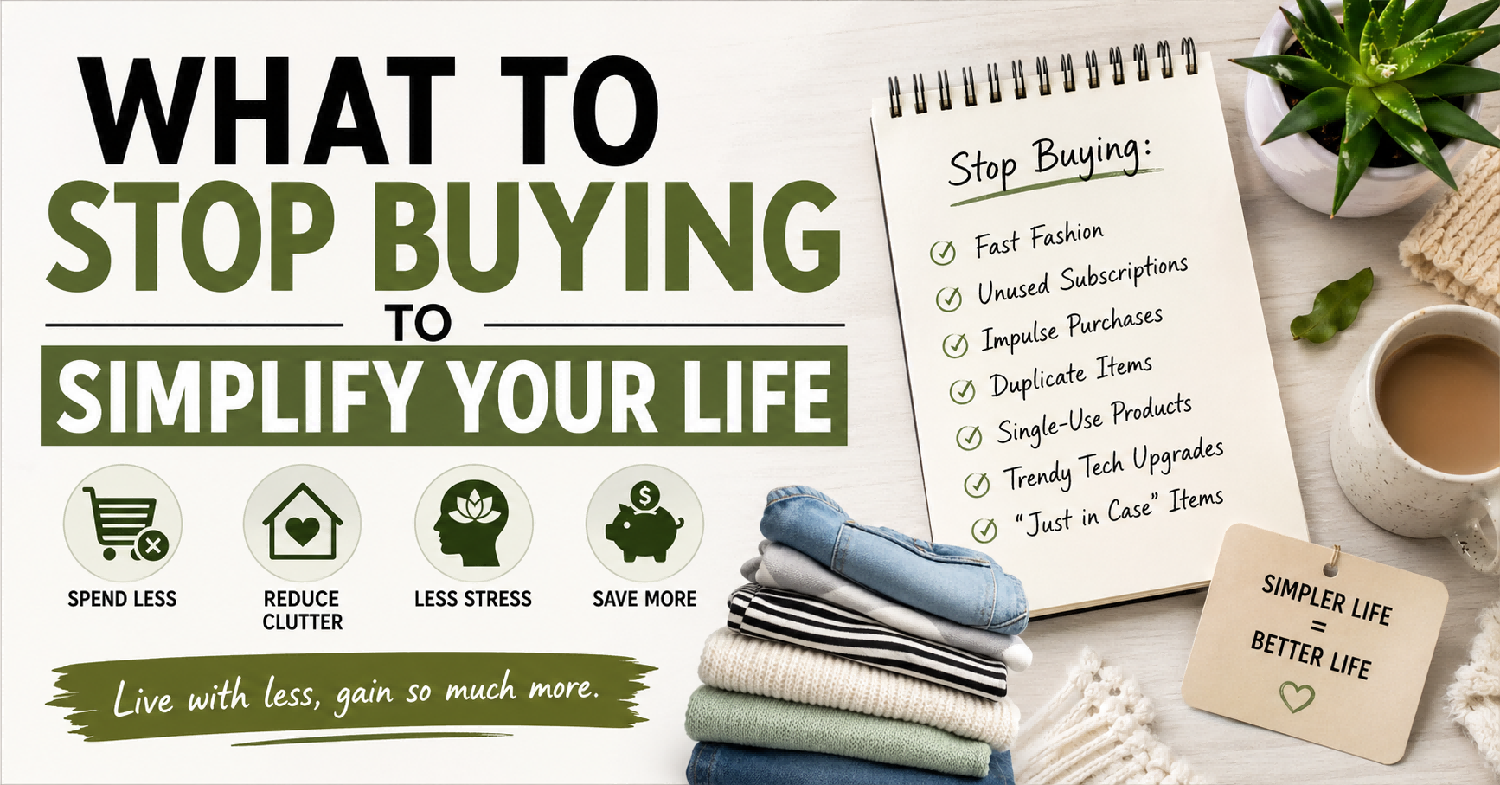
You should stop buying:
- Fast fashion items
- Duplicate household products
- Unused subscriptions
- Trendy tech upgrades
- Impulse purchases
- Single-use products
- “Just in case” items
1. Fast Fashion Items
Fast fashion encourages impulsive buying and short-term use. These items often wear out quickly, leading to a cycle of constant replacement.
Why stop buying:
- Low durability = more frequent spending
- Contributes to closet clutter
- Often driven by trends, not necessity
Smarter alternative:
Invest in high-quality basics or consider a capsule wardrobe. Many people are now exploring sustainable fashion brands and even clothing subscription services, both of which are high-value, high-CPC niches.
2. Duplicate Household Items
How many mugs, scissors, or chargers do you actually need?
Why stop buying:
- Creates unnecessary clutter
- Wastes storage space
- Adds hidden financial cost over time
Smarter alternative:
Adopt a “one-in, one-out” rule. Focus on multi-functional tools and consider researching home organization solutions that are built for efficiency.
3. Unused Subscription Services
From streaming platforms to fitness apps, subscriptions quietly drain your budget.
Why stop buying:
- Recurring monthly costs
- Easy to forget, hard to track
- Often underutilized
Smarter alternative:
Audit your subscriptions regularly. Consider using subscription management apps or personal finance tools—popular and high eCPM topics that also help optimize your spending.
4. Trendy Tech Upgrades
Do you really need the newest phone every year?
Why stop buying:
- High upfront cost
- Marginal improvements
- Encourages unnecessary consumption
Smarter alternative:
Delay upgrades until they’re truly needed. If you’re interested in optimizing value, explore tech comparison platforms or refurbished electronics marketplaces—both strong monetization niches.
5. Impulse Purchases (Especially Online)
Flash sales, limited-time offers, and one-click checkout make overspending dangerously easy.
Why stop buying:
- Emotion-driven decisions
- Leads to buyer’s remorse
- Accumulates hidden debt
Smarter alternative:
Try a 30-day no-buy challenge or use budget tracking apps. Many people also benefit from financial coaching platforms, which are rapidly growing in demand.
6. Single-Use Products
Items designed for one-time use add up quickly—both financially and environmentally.
Why stop buying:
- Repeated purchases increase long-term costs
- Creates waste and clutter
- Not sustainable
Smarter alternative:
Switch to reusable options. This aligns with the rising interest in eco-friendly home products and sustainable living solutions, both highly monetizable content areas.
7. “Just in Case” Items
Buying things “just in case” often leads to never using them at all.
Why stop buying:
- Encourages hoarding behavior
- Takes up valuable space
- Rarely provides real value
Smarter alternative:
Trust that you can buy something later if truly needed. Focus on intentional spending strategies and explore minimalist lifestyle coaching for long-term mindset shifts.
The Financial Impact of Buying Less
When you stop buying unnecessary items, the results go beyond a cleaner home. You gain:
- More savings for investments or emergencies
- Lower stress from reduced financial pressure
- Greater clarity in daily decisions
This is why topics like high-yield savings accounts, investment apps, and financial planning services often have high eCPM—they align with users actively seeking to improve their financial lives.
Final Thoughts
Simplifying your life doesn’t require extreme changes. It starts with small, intentional decisions about what not to buy.
Every item you don’t purchase is:
- Less clutter in your home
- Less stress in your mind
- More money in your pocket
Minimalism isn’t about having less—it’s about making room for what truly matters.
Frequently Asked Questions
How do I start buying less without feeling deprived?
What’s the fastest way to reduce unnecessary spending?
Can minimalism really improve financial health?
How does minimalism help financial health?
If you’re building a simpler life, remember: it’s not about what you remove—it’s about what you make space for.
More Helpful Reads
Looking for more ideas, better habits, or a fresh perspective? Start here.- Smart Spending Habits That Save Money and Reduce Financial Stress
- The Hidden Benefits of Owning Less
- 40 Minimalist Kitchens With Maximum Style


