

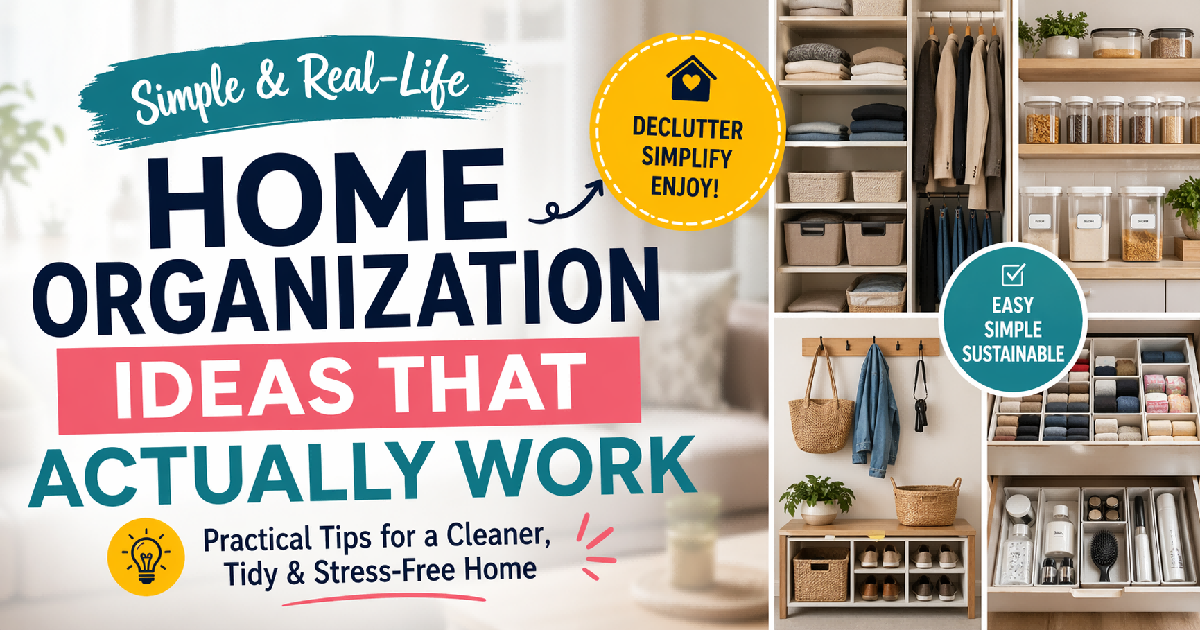
A perfectly organized home looks great on Instagram—but in real life, most systems fall apart within days. Why? Because they’re often too complicated, unrealistic, or hard to maintain.
The truth is: home organization only works if it fits your daily habits. The best systems are simple, flexible, and easy to stick with—even on busy days.
In this guide, you’ll find practical home organization ideas that actually work in real life, not just in photos.
1. Start With “Use Zones,” Not Rooms
Instead of organizing by room (like “kitchen” or “living room”), think in terms of how you use the space.
Examples:
- A coffee station instead of scattered kitchen items
- A drop zone near the door for keys, bags, and mail
- A charging station for devices
- A laundry zone with sorted baskets
Why it works:
You’re organizing based on behavior, not categories—so everything naturally goes back to where it belongs.
2. Use the “One-Minute Rule”
If something takes less than a minute to put away—do it immediately.
Examples:
- Hang your jacket instead of tossing it
- Put dishes straight into the dishwasher
- Return items after using them
Why it works:
Clutter doesn’t build up in the first place. You’re preventing mess instead of cleaning it later.
3. Give Every Item a “Home”
If something doesn’t have a designated place, it will always become clutter.
Simple fixes:
- Use bins, trays, or dividers
- Label when needed (especially for shared spaces)
- Keep similar items grouped together
Why it works:
Decision fatigue disappears—you always know where things go.
4. Declutter Before You Organize
Organization won’t fix clutter—you have to remove excess first.
Try this quick method:
- Keep what you use regularly
- Donate what’s still useful
- Toss what’s broken or outdated
Why it works:
You’re organizing less stuff, which makes everything easier to manage.
5. Make Storage Visible and Easy
If storage is hard to access, you won’t use it.
Better options:
- Open shelves
- Clear containers
- Hooks instead of hangers
- Frequently used items at eye level
Why it works:
Convenience beats intention. If it’s easy, you’ll stick to it.
6. Organize Based on Frequency
Not everything deserves prime space.
Rule of thumb:
- Daily items → easy reach
- Weekly items → nearby storage
- Rare items → higher shelves or bins
Why it works:
You reduce friction in your daily routine.
7. Create Simple Reset Routines
Even the best system needs maintenance.
Try:
- 5-minute nightly reset (living room, kitchen)
- Weekly reset (laundry, fridge, workspace)
Why it works:
Small, consistent effort prevents overwhelming mess.
8. Don’t Over-Organize
Too many bins, labels, or categories can backfire.
Keep it simple:
- Fewer categories
- Flexible storage
- Systems you can maintain without thinking
Why it works:
Simplicity is sustainable. Over-complication leads to burnout.
Final Thoughts
The best home organization ideas aren’t the most beautiful—they’re the ones you can actually maintain.
If you remember just a few principles, make them these:
- Organize based on how you live
- Keep systems simple
- Focus on habits, not perfection
A well-organized home isn’t about doing more—it’s about making everyday life easier.
Quick Recap
- Create zones based on daily use
- Follow the one-minute rule
- Give everything a home
- Declutter before organizing
- Make storage easy to access
- Prioritize frequently used items
- Build small reset routines
- Avoid over-complicated systems


