

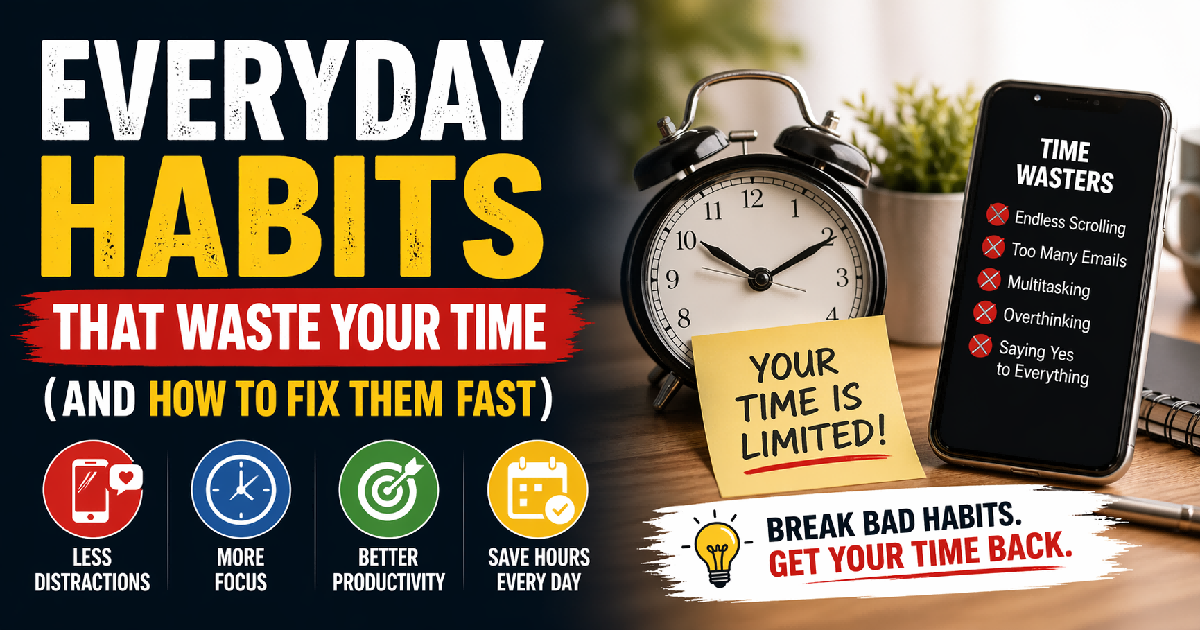
We all have the same 24 hours in a day—but some people seem to get far more done than others. The difference isn’t always talent or motivation. Often, it comes down to small, everyday habits that quietly steal your time.
The problem? Most of these habits feel normal. Harmless, even.
But over days, weeks, and months, they add up—costing you productivity, focus, and even peace of mind.
If you’ve ever wondered where your time goes, this guide will help you identify the biggest time-wasting habits—and replace them with smarter alternatives.
1. Checking Your Phone First Thing in the Morning
Reaching for your phone right after waking up might feel natural, but it immediately puts your mind into reactive mode.
Instead of starting your day with intention, you begin by responding—to messages, notifications, or social media.
Why it wastes time:
- Triggers distraction early
- Delays meaningful morning routines
- Can lead to 30+ minutes of unplanned scrolling
What to do instead:
Start your day phone-free for at least 20–30 minutes. Use that time to:
- Stretch or exercise
- Plan your day
- Enjoy a quiet moment
2. Multitasking Everything
Multitasking feels productive—but it’s often the opposite.
Switching between tasks reduces focus and increases mistakes. Your brain needs time to reset every time you change activities.
Why it wastes time:
- Slows down completion speed
- Reduces quality of work
- Increases mental fatigue
What to do instead:
Try single-tasking:
- Focus on one task at a time
- Set a timer (25–50 minutes)
- Take short breaks between sessions
3. Constantly Checking Emails
Many people check email dozens of times per day—often out of habit, not necessity.
Why it wastes time:
- Interrupts deep work
- Creates unnecessary stress
- Keeps you in “reaction mode”
What to do instead:
Schedule email checks:
- 2–3 times per day is enough for most people
- Turn off non-essential notifications
4. Overthinking Simple Decisions
What to wear, what to eat, what to start first—small decisions can pile up and drain your mental energy.
Why it wastes time:
- Creates decision fatigue
- Slows down action
- Leads to procrastination
What to do instead:
Simplify your choices:
- Plan outfits or meals in advance
- Use routines to reduce daily decisions
- Set quick deadlines for minor choices
5. Saying “Yes” to Everything
Being helpful is great—but constantly saying yes can overload your schedule.
Why it wastes time:
- Fills your day with low-priority tasks
- Leaves little room for your own goals
- Leads to burnout
What to do instead:
Learn to say no politely:
- “I can’t take this on right now.”
- “Let me get back to you.”
Protect your time like it matters—because it does.
6. Unplanned Social Media Scrolling
Social media is designed to keep you engaged. A quick check can easily turn into an hour.
Why it wastes time:
- Highly addictive
- Offers little long-term value
- Disrupts focus
What to do instead:
Set boundaries:
- Use app timers
- Limit usage to specific times of day
- Remove apps from your home screen


