

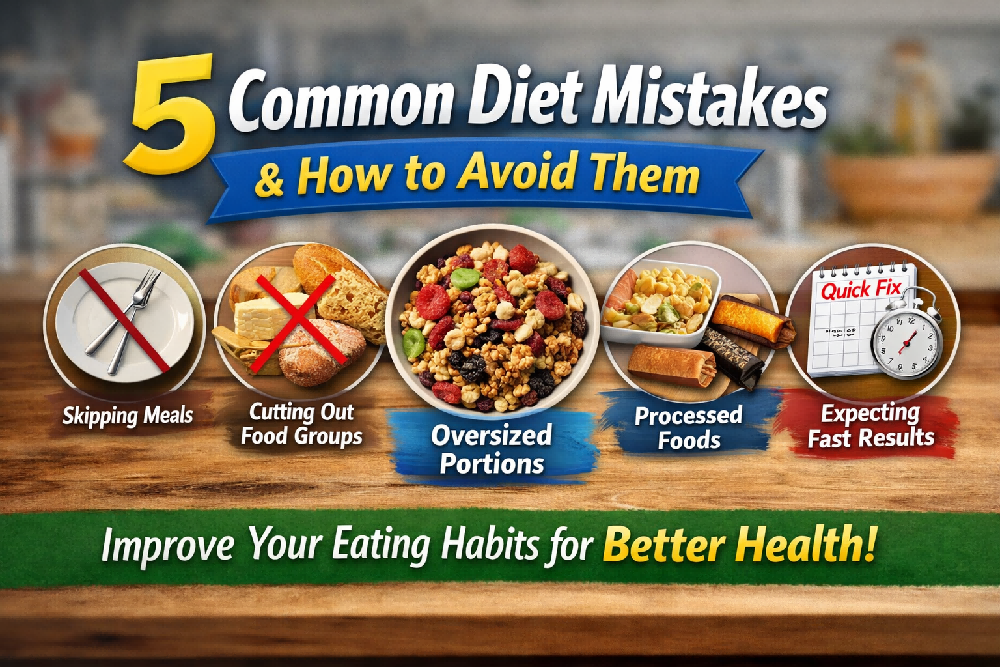
Eating healthy sounds simple: choose better foods, eat balanced meals, and stay consistent. But in real life, nutrition can feel confusing. One week, carbs are the enemy. The next week, everyone is talking about protein, fasting, or cutting sugar completely. With so much advice online, many people end up making diet mistakes without even realizing it.
The truth is, healthy eating is not about being perfect. It is about building habits that support your energy, mood, and long-term health. Many common diet mistakes come from good intentions, but they can still slow down progress and make healthy living feel harder than it needs to be.
Here are five common diet mistakes people make, plus practical ways to avoid them.
1. Skipping Meals to “Save Calories”
A lot of people think skipping breakfast or lunch will help them lose weight faster. At first, it may seem like a smart way to reduce calorie intake. But in many cases, skipping meals leads to intense hunger later in the day, which makes overeating much more likely.
When you go too long without eating, your energy can drop, your mood may shift, and cravings often get stronger. That is when many people end up reaching for large portions, sugary snacks, or fast food. Instead of helping, skipping meals can create a cycle of restriction and overeating.
Why it is a problem
Your body needs regular fuel. When meals are skipped, blood sugar can become less stable, and your body may respond by pushing you to eat more later. This can also make it harder to focus at work, exercise well, or make balanced food choices.
How to avoid it
Try to eat regular meals throughout the day. You do not need to eat constantly, but having a consistent eating pattern can help control hunger and support better choices.
A balanced meal should usually include:
- protein
- fiber-rich carbohydrates
- healthy fats
- fruits or vegetables
For example, instead of skipping breakfast, you could have Greek yogurt with berries and oats, or eggs with whole-grain toast and fruit. If mornings are busy, even something simple is better than nothing.
The goal is not to eat more. The goal is to eat in a way that helps you stay steady, satisfied, and in control.
2. Cutting Out Entire Food Groups
Another common mistake is believing that one type of food is the reason for every health problem. Because of this, people often cut out carbs, fats, dairy, or other food groups without a medical reason.
While some people do need special diets because of allergies, intolerances, or health conditions, many restrictions come from trends rather than real need. Completely removing a food group can make eating stressful and may lead to nutrient gaps.
For example, cutting out all carbs may reduce your intake of fiber, fruit, and whole grains. Avoiding all fats can hurt satiety and make meals less satisfying. Even healthy eating can become unbalanced when it becomes too extreme.
Why it is a problem
Your body needs a range of nutrients to work well. Carbohydrates provide energy. Fats support hormones and brain health. Protein helps maintain muscle and keeps you full. When you remove entire categories of food, it becomes harder to create balanced meals.
Strict food rules can also affect your relationship with food. When foods are labeled “bad,” people often feel guilt after eating them, which can lead to stress, shame, and all-or-nothing thinking.
How to avoid it
Instead of cutting out whole food groups, focus on quality and portions. Choose more whole foods most of the time, but leave room for flexibility.
For example:
- choose whole grains more often than highly refined grains
- include healthy fats like avocado, nuts, seeds, and olive oil
- get protein from a mix of sources such as fish, eggs, beans, yogurt, chicken, or tofu
- enjoy treats in moderation without turning them into “forbidden foods”
A healthy diet is usually more sustainable when it feels realistic. Balance works better than extremes.


