

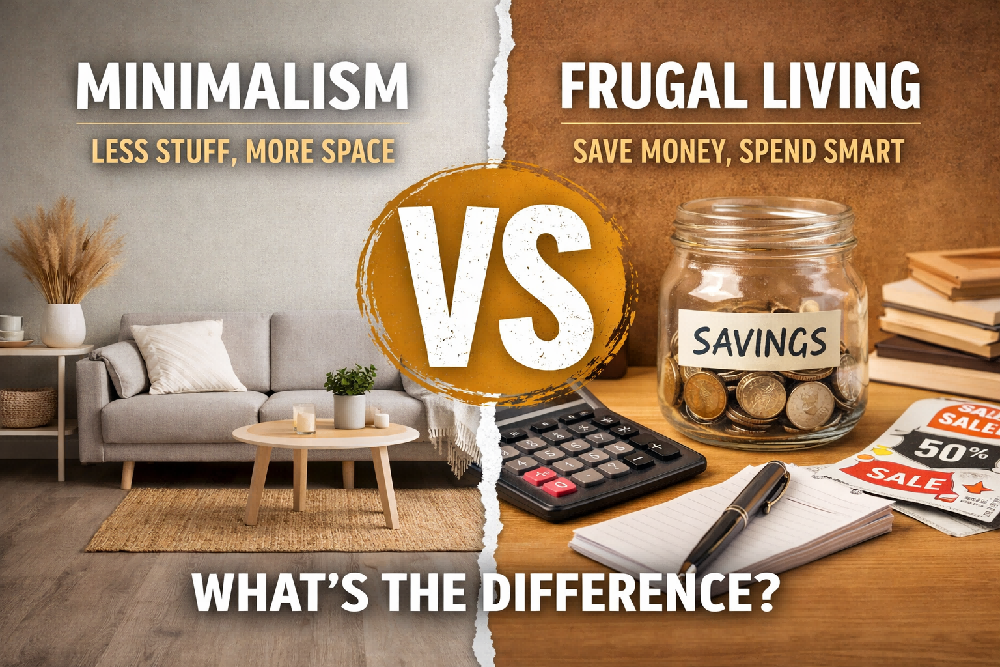
If you have ever tried to simplify your life, you have probably come across two popular ideas: minimalism and frugal living. At first glance, they can look very similar. Both encourage people to be more intentional, spend less on things that do not matter, and stop chasing clutter and excess.
But they are not exactly the same.
Minimalism is usually about owning less and creating more space for what matters. Frugal living is more about using money wisely and getting the most value from what you have. In real life, the two often overlap, but they come from different mindsets.
Understanding the difference can help you choose a lifestyle that feels realistic, meaningful, and sustainable. You do not have to label yourself as one or the other. You can borrow the best parts of both.
Here is what minimalism and frugal living really mean, how they differ, where they overlap, and how to decide which approach works best for your life.
What Is Minimalism?
Minimalism is the practice of removing excess so you can focus on what truly adds value to your life.
For some people, that means owning fewer clothes, fewer decorations, and fewer gadgets. For others, it also means simplifying schedules, relationships, digital habits, and commitments.
At its core, minimalism asks a simple question:
Does this belong in my life?
If the answer is no, the minimalist approach is to let it go.
Minimalism is not about living in an empty white room or throwing away everything you own. It is about being intentional. A minimalist may still own nice things, but those things are chosen carefully and used regularly.
Common minimalist goals:
- Reduce clutter
- Lower mental overload
- Create calm spaces
- Spend less on unnecessary items
- Focus on quality over quantity
- Make room for time, purpose, and peace
Minimalism often appeals to people who feel overwhelmed by modern life. Too many purchases, too many choices, too much stuff, and too much noise can make daily life feel heavier than it needs to be.
What Is Frugal Living?
Frugal living is the practice of managing money carefully and spending with intention.
It is not the same as being cheap. Being cheap often means choosing the lowest cost no matter what. Frugal living is smarter than that. It is about getting the best value, avoiding waste, and making financial decisions that support long-term goals.
A frugal person may compare prices, cook at home, use coupons, repair items, buy secondhand, or skip trendy purchases. The goal is not deprivation. The goal is to make money go further.
Frugal living asks a different question:
Is this worth the cost?
That cost may be money, time, effort, or future financial stress.
Common frugal living goals:
- Save money
- Avoid debt
- Stretch income further
- Reduce waste
- Prepare for emergencies
- Build financial security
Frugal living often appeals to people who want more control over their finances. It can be especially useful during expensive seasons of life, such as raising children, paying off debt, or adjusting to a lower income.


