

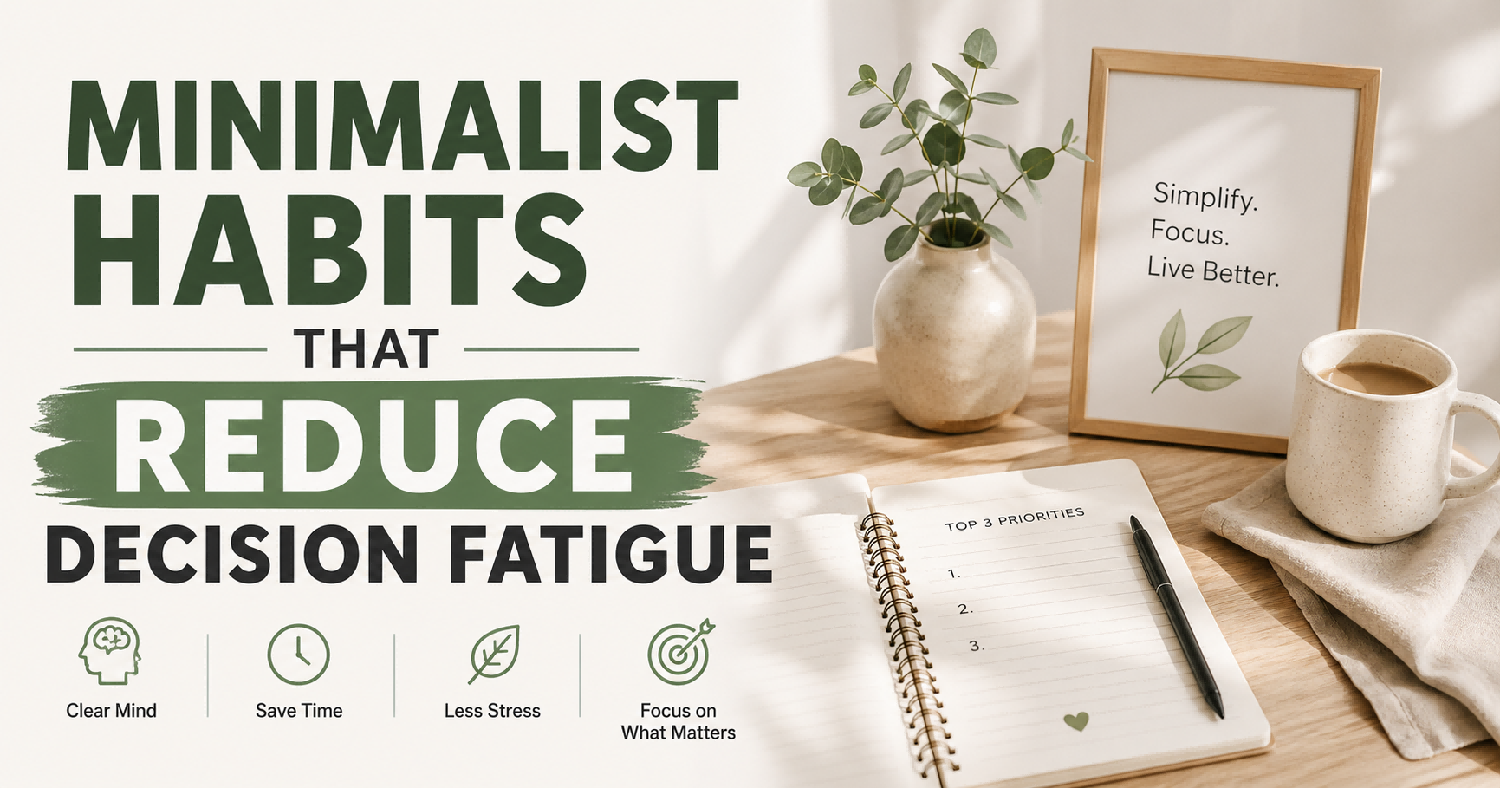
In a world filled with endless choices—what to wear, what to eat, what to prioritize—decision fatigue quietly drains your energy long before the day ends. The more decisions you make, the harder it becomes to make good ones.
Most people don’t realize how much energy they waste on small daily decisions—until they simplify their life.
Minimalism offers a powerful solution. By simplifying your daily life, you reduce unnecessary decisions and free up mental space for what truly matters. Here are practical minimalist habits that help you think clearer, act faster, and feel less overwhelmed.
What Is Decision Fatigue?
Decision fatigue happens when your brain becomes tired from making too many choices. It leads to:
- Poor judgment
- Procrastination
- Impulsive decisions
- Mental exhaustion
The goal isn’t to eliminate decisions—but to reduce unnecessary ones.
1. Simplify Your Wardrobe
A cluttered wardrobe creates dozens of small decisions every morning.
Minimalist habit:
- Build a capsule wardrobe with versatile, neutral pieces
- Choose a “default outfit” formula (e.g., jeans + white shirt + jacket)
Result: You save time and mental energy before your day even starts.
2. Create a Simple Meal Rotation
Deciding what to eat multiple times a day adds up quickly.
Minimalist habit:
- Rotate 5–10 go-to meals
- Plan meals weekly instead of daily
- Prep ingredients in advance
Result: Fewer decisions, healthier choices, less stress.
3. Limit Daily Priorities
A long to-do list creates overwhelm and indecision.
Minimalist habit:
- Focus on 3 key tasks per day
- Ignore low-impact tasks until essentials are done
Result: Clear focus and more meaningful progress.
4. Reduce Digital Noise
Notifications and endless apps constantly demand decisions.
Minimalist habit:
- Turn off non-essential notifications
- Keep only essential apps on your home screen
- Schedule specific times to check messages
Result: Less distraction, more control over your attention.
5. Establish Daily Routines
Routines eliminate the need to decide what to do next.
Minimalist habit:
- Create a consistent morning and evening routine
- Automate repetitive tasks (same wake-up time, same workflow)
Result: Your day flows naturally without constant decision-making.
6. Set Personal Rules
Rules reduce the need to rethink the same choices repeatedly.
Minimalist habit:
- “If I haven’t used it in a year, I let it go”
- “No phone during the first hour of the day”
- “Buy only what serves a purpose”
Result: Faster decisions and fewer regrets.
7. Declutter Your Environment
Physical clutter leads to mental clutter.
Minimalist habit:
- Keep surfaces clean and intentional
- Own fewer but higher-quality items
Result: A calm environment that supports clear thinking.
Final Thoughts
Decision fatigue isn’t just about being busy—it’s about being overwhelmed by choices that don’t matter.
Minimalist habits help you:
- Eliminate low-value decisions
- Preserve mental energy
- Focus on what truly matters
Start small. Pick one habit—simplify your wardrobe, plan your meals, or reduce digital distractions—and notice how much lighter your mind feels.
Because sometimes, the best way to do more… is to decide less.


