

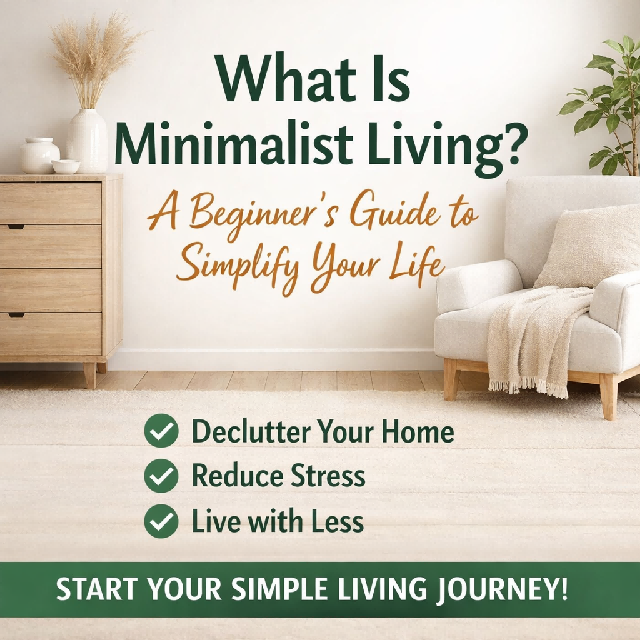
Minimalist living has become increasingly popular in recent years. Many people in the United States, Canada, and other English-speaking countries are choosing a simpler lifestyle that focuses on what truly matters. But what exactly is minimalist living, and how can beginners start practicing it? This beginner’s guide explains the core idea of minimalism and offers practical steps to help you start simplifying your life.
What Is Minimalist Living?
Minimalist living is a lifestyle that focuses on removing unnecessary possessions, distractions, and commitments so you can concentrate on what truly adds value to your life. Instead of constantly buying more things, minimalists prioritize:
- Experiences over possessions
- Quality over quantity
- Intentional choices over impulse purchases
Minimalism does not mean living with nothing. Instead, it means owning and doing only what truly serves a purpose or brings joy. For some people, minimalism means having fewer belongings. For others, it means simplifying schedules, reducing digital clutter, or focusing more on mental well-being.
Why More People Are Choosing Minimalism
Modern life can feel overwhelming. Busy schedules, constant notifications, and endless consumer choices often lead to stress and burnout. Minimalist living offers a way to regain control and create a calmer lifestyle.
1. Less Stress
Cluttered environments often lead to mental overload. A simplified space can help create a calmer and more peaceful mindset.
2. More Time
Owning fewer things means spending less time cleaning, organizing, and managing possessions.
3. Better Financial Habits
Minimalists usually make more intentional purchases, which helps reduce unnecessary spending.
4. Greater Focus
With fewer distractions, you can focus on meaningful goals, relationships, and personal growth.
Common Misconceptions About Minimalism
Many people misunderstand minimalist living.
Myth 1: Minimalists own almost nothing.
Reality: Minimalists simply keep what they truly need or value.
Myth 2: Minimalism is only about decluttering.
Reality: Decluttering is just the beginning. Minimalism also involves mindset and lifestyle choices.
Myth 3: Minimalism is restrictive.
Reality: Most people find minimalism freeing rather than limiting.
How to Start Minimalist Living
You don’t need to transform your entire life overnight. Small changes can make a big difference.
Start Decluttering One Area
Begin with a small space such as:
- Your desk
- A closet
- A kitchen drawer
Ask yourself:
- Do I use this regularly?
- Does it add value to my life?
If not, consider donating or removing it.
Be More Intentional With Purchases
Before buying something new, ask yourself:
- Do I really need this?
- Will I use it often?
- Do I already own something similar?
Intentional spending is a key principle of minimalist living.


