

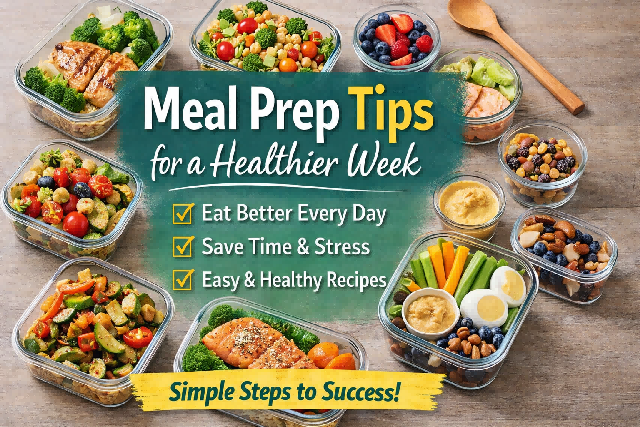
In today’s fast-paced world, eating healthy often feels like a challenge. Between work, family responsibilities, and social commitments, it’s easy to fall into the habit of grabbing fast food or skipping meals altogether. That’s where meal prepping comes in.
Meal prep—short for meal preparation—is a simple yet powerful strategy that helps you plan, prepare, and portion your meals in advance. With just a few hours of effort each week, you can save time, reduce stress, and stay on track with your nutrition goals.
In this guide, you’ll discover practical meal prep tips to help you build a healthier, more balanced week—without feeling overwhelmed.
Why Meal Prep Matters
Meal prepping isn’t just about convenience—it’s about making better choices easier.
When you have healthy meals ready to go:
- You’re less likely to rely on processed or fast foods
- You can control portion sizes and ingredients
- You reduce food waste and save money
- You stay consistent with your health goals
For many people in the U.S. and Canada, where busy schedules are the norm, meal prepping can be the key to maintaining a balanced diet.
Start with a Simple Plan
The first step to successful meal prep is planning. You don’t need a complicated system—just a clear idea of what you’ll eat for the week.
How to get started:
- Choose 3–5 meals you want to prepare
- Focus on simple, repeatable recipes
- Consider your schedule (busy days vs. lighter days)
- Write a grocery list based on your plan
Start small. Even prepping just lunches or dinners can make a big difference.
Choose Balanced, Nutritious Ingredients
A healthy meal should include a mix of macronutrients:
- Protein (chicken, fish, tofu, beans)
- Carbohydrates (brown rice, quinoa, sweet potatoes)
- Healthy fats (avocado, olive oil, nuts)
- Fiber-rich vegetables (broccoli, spinach, peppers)
Aim for colorful plates. The more variety you include, the more nutrients your body gets.
Batch Cooking: Save Time and Energy
Batch cooking is the heart of meal prep. Instead of cooking every day, you prepare larger quantities at once.
Examples:
- Cook a big pot of quinoa or brown rice
- Roast a tray of mixed vegetables
- Grill or bake multiple portions of protein
Store them in separate containers so you can mix and match meals throughout the week.
Invest in Quality Containers
Good storage makes meal prep easier and more enjoyable.
Look for:
- BPA-free plastic or glass containers
- Leak-proof lids
- Microwave and dishwasher safety
- Stackable designs for easy storage
Portioning your meals in advance also helps prevent overeating.
Keep It Fresh and Safe
Food safety is essential when preparing meals ahead of time.
Tips:
- Store meals in the refrigerator for up to 3–4 days
- Freeze meals if you’re prepping for longer periods
- Let hot food cool before sealing containers
- Label containers with dates
This ensures your meals stay fresh and safe to eat.


