

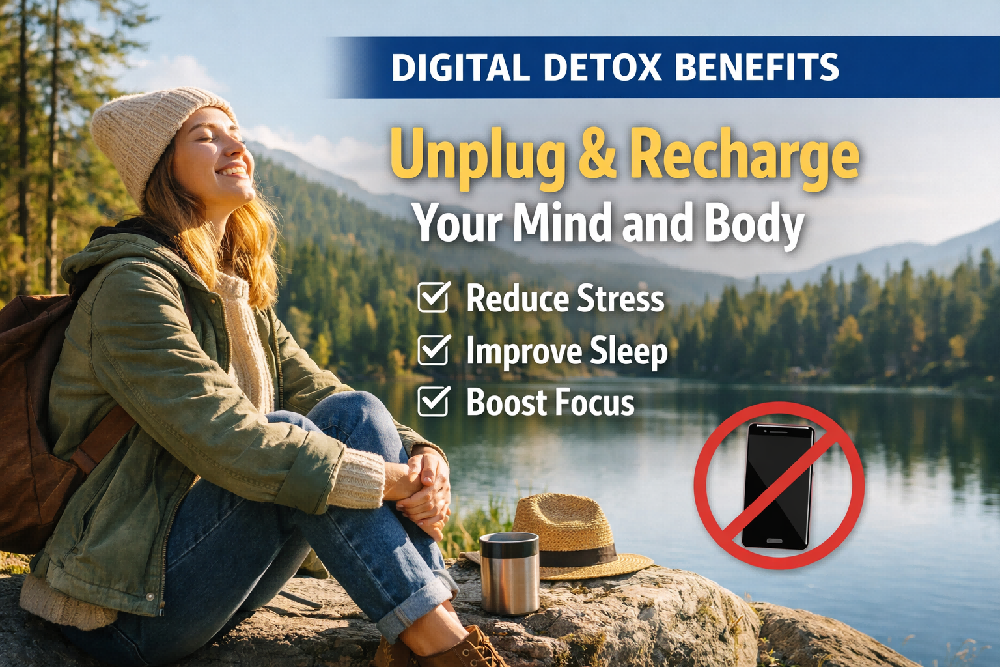
We live in a world where screens are always within reach. Phones wake us up, laptops power our workdays, and social media fills the quiet moments in between. For many people in the U.S., Canada, and other English-speaking countries, being constantly connected feels normal. But normal does not always mean healthy.
That is why more people are starting to talk about the idea of a digital detox. A digital detox does not mean rejecting technology forever or living without the internet. It simply means taking intentional breaks from screens, notifications, and online noise so your mind and body can reset.
If you have ever felt mentally tired after scrolling, struggled to focus, or noticed that your sleep is worse after late-night screen time, a digital detox may be exactly what you need. Here is how unplugging can support both your mental and physical well-being—and how to make it work in real life.
What Is a Digital Detox?
A digital detox is a planned period of time when you reduce or avoid the use of digital devices such as smartphones, tablets, computers, TVs, and social media platforms. Some people do a detox for a few hours each day. Others try a full weekend offline. Some simply remove the most distracting habits, like checking social media every 10 minutes.
The goal is not perfection. The goal is awareness.
A digital detox helps you notice how much time and energy technology takes from your day. It also gives your brain a chance to rest from the endless stream of alerts, messages, videos, and news updates that can quietly drain you.
Why So Many People Feel Digitally Overloaded
Modern technology is designed to keep our attention. Notifications pull us back in. Social feeds never really end. Emails, texts, and breaking news make it feel like we always need to stay available.
Over time, this constant stimulation can affect how we feel. You may notice:
- trouble focusing on one task
- feeling restless without your phone
- comparing your life to other people online
- difficulty relaxing at night
- eye strain, headaches, or poor posture
- feeling busy all day but not truly productive
When your brain is always “on,” true rest becomes harder to find.
Mental Benefits of a Digital Detox
1. Better Focus and Concentration
One of the biggest benefits of unplugging is improved attention. Constant screen switching trains the brain to expect quick rewards and frequent interruptions. As a result, deep focus becomes harder.
When you step away from your phone or limit digital distractions, your mind has a chance to slow down. You may find it easier to read, write, work, cook, or even have a full conversation without feeling the urge to check a screen.
Many people are surprised by how much mental clarity returns after even a short break from digital overload.
2. Lower Stress Levels
Technology keeps us connected, but it also keeps us exposed to pressure. Work emails after hours, upsetting headlines, social media arguments, and the feeling that you should always respond right away can all increase stress.
A digital detox creates breathing room. Fewer notifications mean fewer interruptions. Less scrolling means less emotional overload. Even a quiet hour without a screen can feel calming in a way that many people forget is possible.
3. Improved Mood
Social media can be entertaining and useful, but too much of it can leave people feeling anxious, distracted, or dissatisfied. It is easy to compare your daily life to someone else’s highlight reel.
Taking a break from constant online comparison can help you reconnect with your own reality. Many people feel lighter, calmer, and more present when they spend less time online and more time in the real world.
4. Better Sleep Quality
This is one of the most common reasons people try a digital detox. Using screens late at night can make it harder to fall asleep and stay asleep. Bright light, mental stimulation, and the habit of “just one more scroll” can all delay real rest.
When you replace nighttime screen time with a calmer routine—like reading, stretching, journaling, or taking a shower—your body often responds quickly. Better sleep can improve energy, mood, patience, and mental sharpness.
5. More Presence in Daily Life
Have you ever reached the end of a meal, walk, or conversation and realized you barely experienced it because you were checking your phone? Digital habits can quietly steal attention from everyday life.
A detox helps bring you back. You notice the people around you more. You become more engaged in simple moments. Life may not suddenly become easier, but it often feels more real.


