

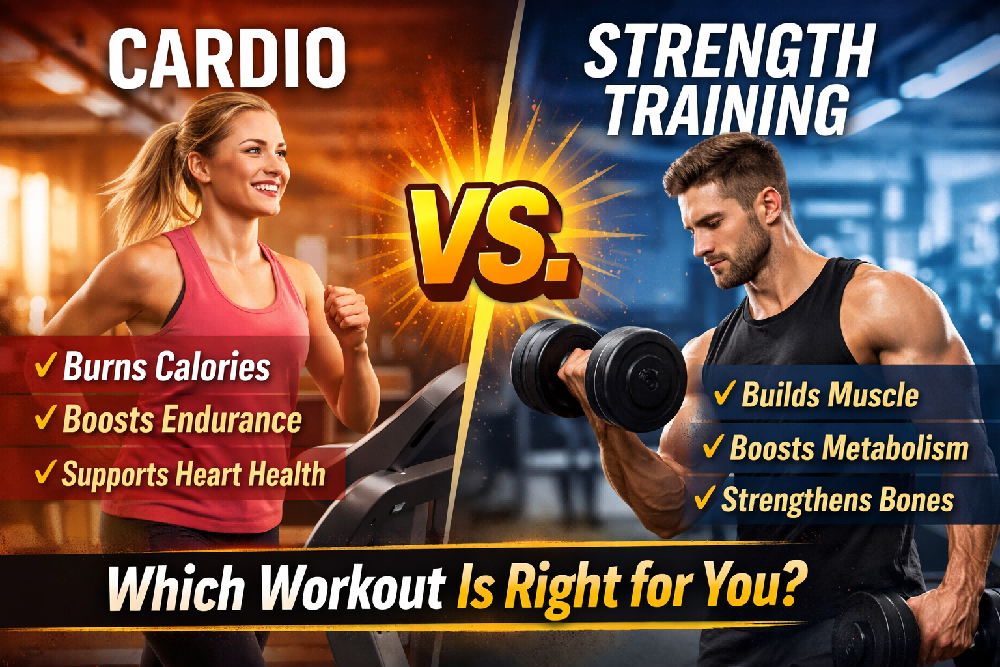
If you have ever stood in a gym wondering whether you should head for the treadmill or pick up a pair of dumbbells, you are not alone. For many people, fitness feels confusing because there are so many opinions online. Some people swear by cardio for fat loss. Others say strength training is the real key to changing your body and improving your health.
So which one is right for you?
The truth is, both cardio and strength training offer valuable benefits. The better choice depends on your goals, your lifestyle, your body, and what you actually enjoy enough to keep doing. The best workout plan is not the trendiest one. It is the one that fits your life and helps you stay consistent.
Here is a simple breakdown of cardio vs. strength training, what each one does, and how to choose the right approach for you.
What Is Cardio?
Cardio, short for cardiovascular exercise, is any activity that raises your heart rate and keeps it elevated for a period of time. Walking fast, jogging, cycling, swimming, dancing, rowing, and even hiking can all count as cardio.
Cardio is often the first type of exercise people think about when they want to lose weight or improve fitness. That is because it burns calories during the workout and helps strengthen your heart and lungs.
Benefits of cardio
Cardio can help you:
- Improve heart health
- Increase stamina and endurance
- Burn calories efficiently
- Support weight loss
- Reduce stress and improve mood
- Sleep better
- Boost overall energy levels
Many people also enjoy cardio because it is simple. You can go for a walk outside, take an online dance class, or ride a stationary bike while watching a show. It does not always require a gym or a complicated routine.
What Is Strength Training?
Strength training includes any type of exercise that makes your muscles work against resistance. That resistance can come from dumbbells, resistance bands, barbells, machines, or even your own body weight through movements like squats, push-ups, and lunges.
Some people still think strength training is only for bodybuilders or people trying to get bulky. That idea is outdated. Strength training is for everyone, including beginners, older adults, and people who simply want to feel stronger and healthier in daily life.
Benefits of strength training
Strength training can help you:
- Build lean muscle
- Increase strength and stability
- Support fat loss over time
- Improve posture
- Protect bone health
- Reduce the risk of injury
- Make everyday tasks easier
- Improve body composition
One of the biggest advantages of strength training is that it can change how your body looks and functions even if the number on the scale does not move much. Muscle takes up less space than fat, so people often look leaner and feel stronger without dramatic weight changes.
Which Is Better for Weight Loss?
This is the question most people ask first.
Cardio usually burns more calories during the workout itself. If you run for 30 minutes, you may burn more immediate calories than you would during a short strength session. That is why cardio is often linked to fast weight-loss plans.
However, strength training plays an important long-term role in weight management. Building muscle can help support your metabolism, and muscle tissue also helps your body burn more energy throughout the day compared to fat tissue.
In other words, cardio may help you burn more now, while strength training can help your body become more efficient over time.
If your goal is fat loss, the smartest plan usually includes both. Cardio helps increase calorie burn and improve endurance. Strength training helps preserve muscle while you lose fat, which is especially important if you want a toned, strong look instead of simply becoming smaller.
Which Is Better for Overall Health?
Again, both matter.
Cardio is excellent for your heart, circulation, lung capacity, and endurance. It is especially helpful if you want to improve your cardiovascular health, lower stress, and increase daily energy.
Strength training is excellent for muscles, joints, bones, posture, and long-term physical function. It becomes even more important as people age because muscle mass naturally declines over time. Staying strong can help you remain independent, balanced, and active later in life.
If you only do cardio and ignore strength training, you may miss out on major benefits related to muscle and bone health. If you only do strength training and never challenge your heart and lungs, you may miss important endurance and cardiovascular benefits.
That is why many fitness experts recommend treating cardio and strength training as teammates, not competitors.


