

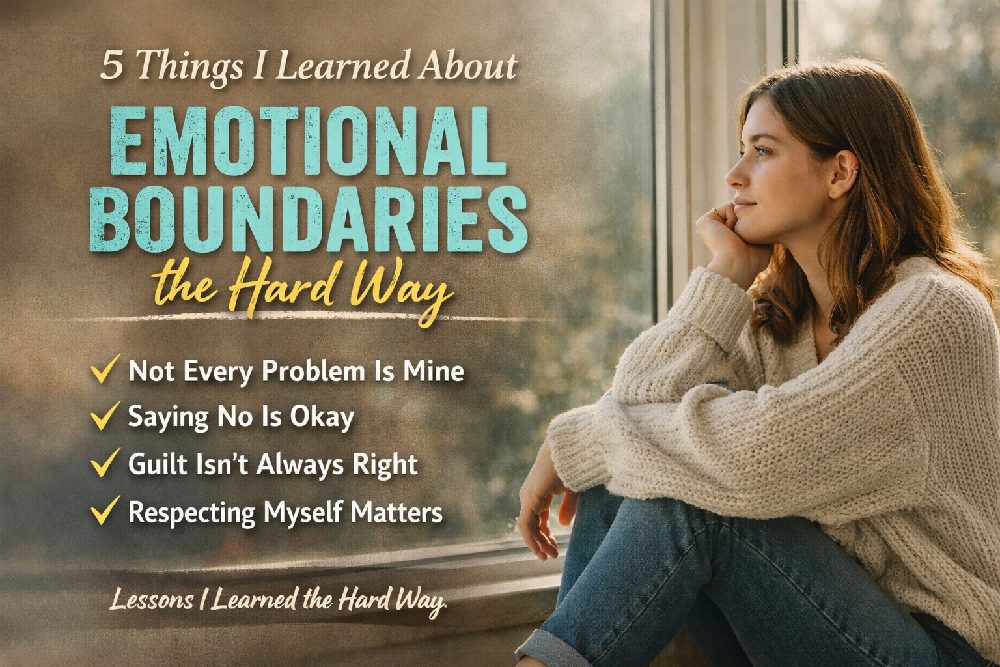
There was a time in my life when I thought being a good person meant always being available.
If someone needed to talk, I answered.
If someone was upset, I tried to fix it.
If a friend crossed a line, I told myself they were just having a hard time.
If a relationship left me exhausted, I stayed longer than I should have because I did not want to seem cold, selfish, or difficult.
For a long time, I confused love with sacrifice. I believed that caring deeply meant stretching myself as far as possible for other people, even when it hurt. I did not realize that every time I ignored my own limits, I was teaching others that my feelings came second.
It took several painful experiences for me to understand something simple but life-changing: emotional boundaries are not walls. They are not punishments. They are not a sign that you care less. Emotional boundaries are how you protect your peace, your dignity, and your sense of self.
I did not learn this in one perfect moment. I learned it slowly, through heartbreak, disappointment, resentment, and emotional burnout. Looking back now, there are five important lessons that changed the way I see relationships and myself.
1. Not Every Problem Belongs to Me
This was the first and hardest lesson.
For years, I felt responsible for other people’s emotions. If someone I loved was angry, I felt like I had to calm them down. If they were sad, I felt like I had to carry that sadness with them. If they were disappointed, I immediately searched for what I had done wrong.
I became the emotional manager in many of my relationships. I listened, reassured, explained, softened, and absorbed. On the outside, I looked supportive. On the inside, I was constantly anxious.
The turning point came when I noticed how tired I felt after certain conversations. I would hang up the phone or leave a room feeling heavy, tense, and strangely guilty. Sometimes I had not even done anything wrong. I had simply been pulled into someone else’s emotional storm.
That was when I began to understand a truth I had resisted: compassion does not require ownership.
I can care about someone without taking responsibility for their emotional state. I can listen without fixing. I can support without carrying. I can love someone without letting their chaos become my identity.
This lesson changed everything. Once I stopped believing that every problem belonged to me, I felt lighter. I was still kind, still present, still caring—but I was no longer drowning in feelings that were not mine to hold.
2. Saying “No” Does Not Make Me Cruel
I used to think that setting limits would hurt people and make me look selfish.
So instead of saying “no,” I said things like:
- “Maybe later.”
- “I’ll see what I can do.”
- “It’s fine.”
- “Don’t worry about me.”
What I really meant was:
- “I’m overwhelmed.”
- “I don’t have the energy.”
- “I’m uncomfortable.”
- “I need space.”
But I was afraid that honesty would disappoint people. I wanted to be seen as understanding, generous, and easygoing. So I kept saying yes when my body and mind were begging me to say no.
The result was predictable. I became resentful.
That resentment was important because it revealed something I had been trying not to see. Resentment often grows where boundaries have been ignored. It is the emotional signal that tells you something is being taken from you without your true consent.
The first time I said a clear no, I felt shaky. I replayed the conversation in my head. I worried that I sounded rude. But something surprising happened: the world did not end.
Some people understood immediately. Some did not. A few pushed back because they were used to unlimited access to me. That reaction taught me something too. The people most upset by your boundaries are often the ones who benefited most from your lack of them.
Now I know that saying “no” is not cruelty. It is clarity. It tells people where I end and where they begin. It protects my energy so that when I do say yes, I mean it honestly.


