

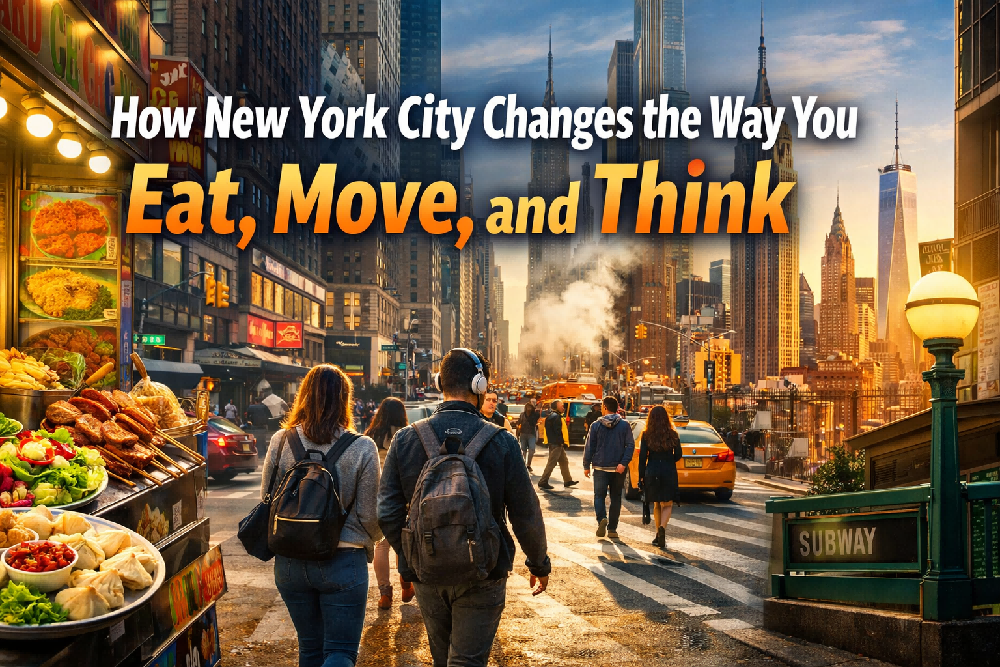
New York City is more than a place. It is a daily experience that reshapes your habits, your pace, and even your mindset. People often move to New York for work, ambition, or excitement, but many discover something unexpected after a few months or years: the city changes them from the inside out.
It changes the way they eat because food in New York is everywhere, and it reflects every culture, every schedule, and every budget. It changes the way they move because daily life in the city demands walking, climbing stairs, rushing for trains, and adjusting to crowded streets. And it changes the way they think because living in a place filled with energy, diversity, competition, and creativity naturally pushes the mind in new directions.
For many people from the U.S., Canada, and other English-speaking countries, New York represents the ultimate city lifestyle. But the real story is not only about famous landmarks or movie-style glamour. It is about how everyday life in New York slowly transforms ordinary routines into something different.
You Start Eating for Speed, Variety, and Curiosity
In many places, meals are planned around convenience, home routines, or a short list of favorite restaurants. In New York City, food becomes part of the rhythm of the street. You are surrounded by choices from morning to midnight, and that changes your relationship with eating.
Breakfast might come from a corner bagel shop. Lunch could be a salad bowl, halal cart, Korean rice dish, or slice of pizza. Dinner may be eaten late because work ran long or because meeting friends in the city often starts later than expected. Over time, people become more flexible. They eat when they can, where they are, and based on what fits the moment.
That does not always mean unhealthy eating. In fact, New York can push people in both directions. On one side, the city offers endless fast food, desserts, and late-night comfort meals. On the other, it also makes healthy food much more visible and accessible. Smoothie bars, vegan cafés, juice shops, organic markets, and fresh meal counters are part of everyday life in many neighborhoods.
Another major shift is cultural exposure. In New York, trying new food is not an occasional adventure. It becomes normal. A person who once stayed within familiar American comfort food might suddenly find favorite dishes from Japan, Ethiopia, Mexico, Georgia, or Thailand. Food becomes a form of education. It teaches openness without feeling like a lesson.
This variety also changes expectations. After living in New York, many people become less interested in repetitive meals and more curious about flavor, quality, and authenticity. They start noticing the difference between food that is simply convenient and food that reflects a real tradition or strong local identity.
You Walk More Than You Ever Expected
One of the biggest physical changes in New York City is movement. In car-centered places, it is easy to spend most of the day sitting. In New York, even people who do not work out regularly often move much more than they realize.
A normal day may include walking to the subway, standing on the platform, climbing stairs, switching trains, walking to the office, going out for coffee, and then doing it all again on the way home. Add grocery trips, errands, social plans, and weekend exploring, and the total amount of movement adds up fast.
This kind of movement feels different from formal exercise. It is not always planned. It is built into the structure of city life. That makes it easier to sustain. Many people who move to New York notice changes in stamina, posture, and body awareness simply because they are active by default.
The city also teaches a kind of movement intelligence. You learn how to walk with purpose, how to weave through crowds, when to slow down, and when to speed up. You become better at reading space and timing. Even crossing the street becomes a small urban skill.
At first, this pace can feel exhausting. But over time, many people begin to enjoy it. Walking in New York is not just transportation. It is a way of observing the city. You pass bookstores, food carts, street musicians, dog walkers, delivery bikes, fashion trends, and small moments of everyday drama. The city reveals itself block by block.
That constant movement can also affect mood. Many people find that walking more improves their energy and mental clarity. Instead of driving between isolated locations, they feel more connected to the city and to their own day.
Your Thinking Becomes Faster and More Flexible
New York City is famous for speed, but the deeper effect is mental. The city trains your brain to adapt quickly. Plans change. Trains are delayed. Weather shifts. Crowds build. Opportunities appear unexpectedly. You learn to make decisions faster, recover faster, and keep moving.
This does not mean everyone becomes aggressive or impatient. But it often means people become more alert and more responsive. They start thinking in a more practical way. They learn how to prioritize, how to read situations quickly, and how to protect their time.
Living in New York also expands perspective. You hear different accents, opinions, and life stories every day. You meet people from different countries, classes, religions, and industries. That kind of daily exposure makes the world feel larger and more immediate. It becomes harder to think in a narrow way when the city constantly reminds you how many ways there are to live.
For many residents, this creates a stronger sense of independence. The city expects you to solve problems, speak up, and figure things out. Whether you are dealing with rent, commuting, work pressure, or social life, New York teaches resilience. You may not notice it at first, but one day you realize you are calmer in chaos than you used to be.
At the same time, the city can sharpen ambition. New York surrounds people with visible effort. Everyone seems to be building something, chasing something, or reinventing something. That energy can be inspiring. It can make people think bigger, take themselves more seriously, and stop waiting for perfect conditions before acting.


