

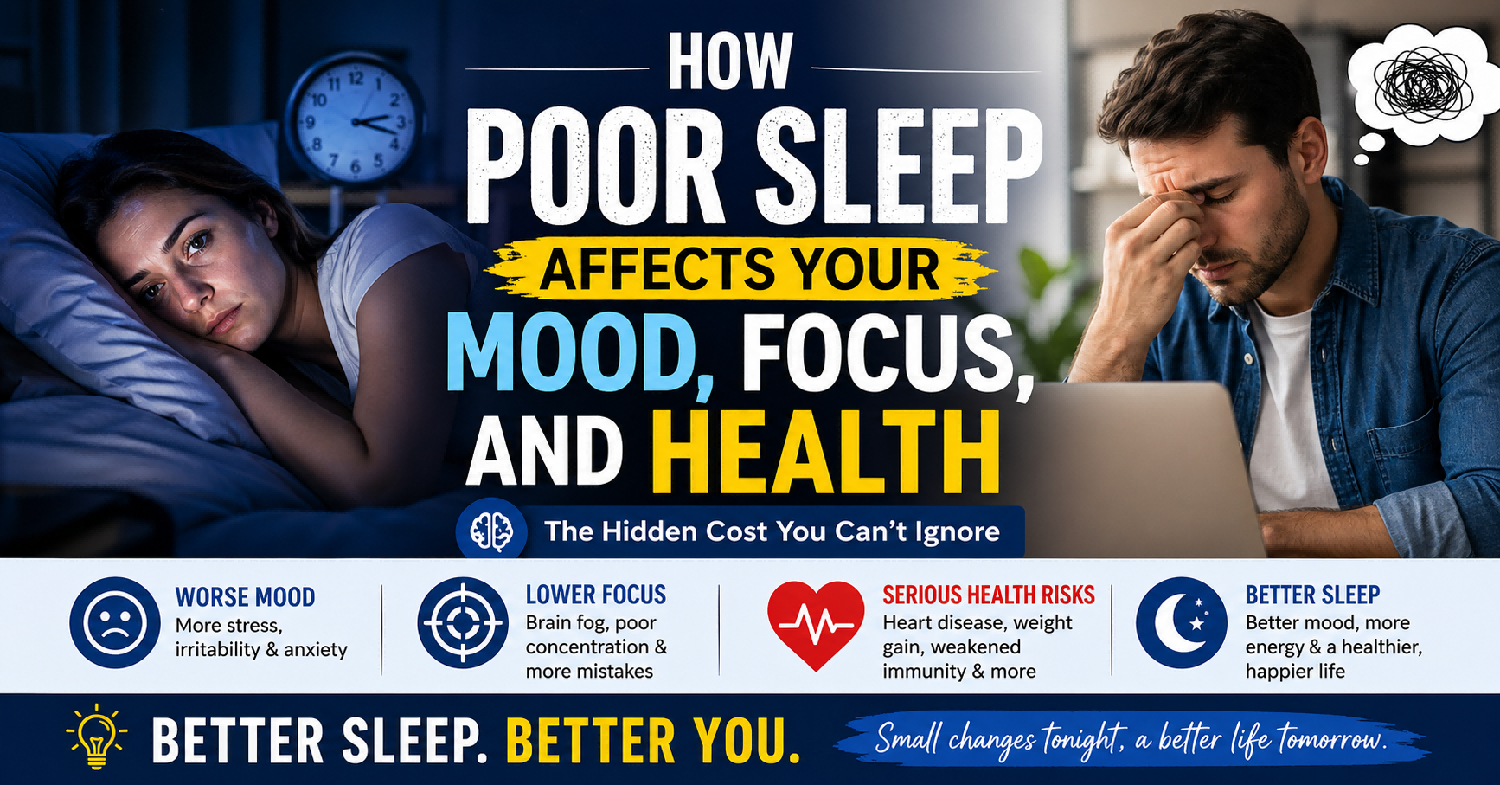
What are the effects of poor sleep?
Poor sleep can negatively affect your mood, reduce focus, and increase the risk of serious health conditions such as heart disease, obesity, and anxiety disorders.
Sleep is often treated as optional—but in reality, it’s one of the most powerful factors shaping your mental clarity, emotional balance, and long-term health. Poor sleep doesn’t just make you feel tired—it quietly affects your productivity, decision-making, and even your financial well-being.
If you’re trying to improve your daily performance, reduce stress, or even optimize your lifestyle for better results, understanding the hidden costs of poor sleep is essential.
1. Poor Sleep and Your Mood: The Hidden Emotional Cost
When you don’t get enough quality sleep, your brain struggles to regulate emotions.
- You become more irritable and reactive
- Small problems feel overwhelming
- Anxiety and stress levels increase
- You’re more likely to experience mood swings
Sleep deprivation directly impacts the amygdala—the part of your brain responsible for emotional processing. Without proper rest, it becomes overactive, making you more sensitive to negative experiences.
Why this matters:
People who sleep poorly often make worse decisions in relationships, work, and finances. Over time, this can lead to higher stress levels—and even increased spending on things like stress relief products, therapy apps, or wellness subscriptions.
2. Poor Sleep and Focus: Why You Can’t Concentrate
Lack of sleep severely reduces cognitive performance.
- Shorter attention span
- Slower reaction time
- Reduced memory retention
- Increased mistakes at work
In today’s digital world, where productivity tools, SaaS platforms, and remote work systems dominate, poor focus can directly impact your income and career growth.
You may find yourself:
- Re-reading the same sentence multiple times
- Forgetting important tasks
- Struggling to complete simple work
The financial impact:
Lower productivity can lead to missed opportunities, reduced performance, and even job instability—especially in high-paying digital or tech-related roles.
👉 “If you often feel tired during the day, it might be time to explore sleep tracking tools or stress management apps that can improve your daily performance.”
3. Poor Sleep and Physical Health: Long-Term Risks
Chronic sleep deprivation doesn’t just affect your mind—it impacts your entire body.
Key health risks include:
- Weakened immune system
- Increased risk of heart disease
- Weight gain and slower metabolism
- Higher risk of diabetes
Sleep is when your body repairs itself. Without it, inflammation increases, hormones become imbalanced, and your overall health declines.
Insurance & healthcare angle:
Long-term poor sleep can lead to higher medical costs, increased reliance on healthcare services, and a greater need for health insurance coverage.
4. The Productivity Trap: Why Working More Doesn’t Help
Many people sacrifice sleep to “get more done.” But this often backfires.
- You work longer but achieve less
- You make more errors that require fixing
- Your efficiency drops significantly
In fact, studies show that sleep-deprived individuals perform similarly to those under the influence of alcohol.
The smarter approach:
Optimizing sleep can actually increase your output without increasing your workload.
5. Simple Ways to Improve Sleep Quality
Improving sleep doesn’t require drastic changes. Small adjustments can make a big difference.
Try these practical tips:
1. Set a consistent sleep schedule
Go to bed and wake up at the same time daily—even on weekends.
2. Reduce screen time before bed
Blue light from devices interferes with melatonin production.
3. Optimize your sleep environment
Keep your room dark, quiet, and cool.
4. Avoid caffeine late in the day
It can stay in your system for hours.
5. Use smart sleep tools
Sleep tracking apps and wearable devices can help you understand your patterns.
6. Why Better Sleep Is a High-ROI Life Upgrade
Improving your sleep is one of the highest-return investments you can make.
- Better mood → stronger relationships
- Better focus → higher productivity and income
- Better health → lower long-term costs
Unlike many lifestyle changes, sleep improvement doesn’t require expensive investments—but it can lead to significant gains across every area of your life.
Final Thoughts
Poor sleep doesn’t just make you tired—it quietly impacts your emotions, your performance, and your long-term health.
In a world filled with productivity tools, health apps, and financial strategies, the simplest upgrade might be the most powerful: getting better sleep.
If you’re looking to improve your life, start with your nights—and your days will follow.


