

Alexander Sterling didn’t just launch technical attacks. He launched a full-scale business war.
Within a month of his insulting offer, Sterling Enterprises announced SterlingSource—a direct competitor to Phoenix Connect. Alexander positioned it as an “AI-powered platform for ethical sourcing,” but it was obvious what he was doing.
He was trying to crush us by copying us.
The difference was in the execution.
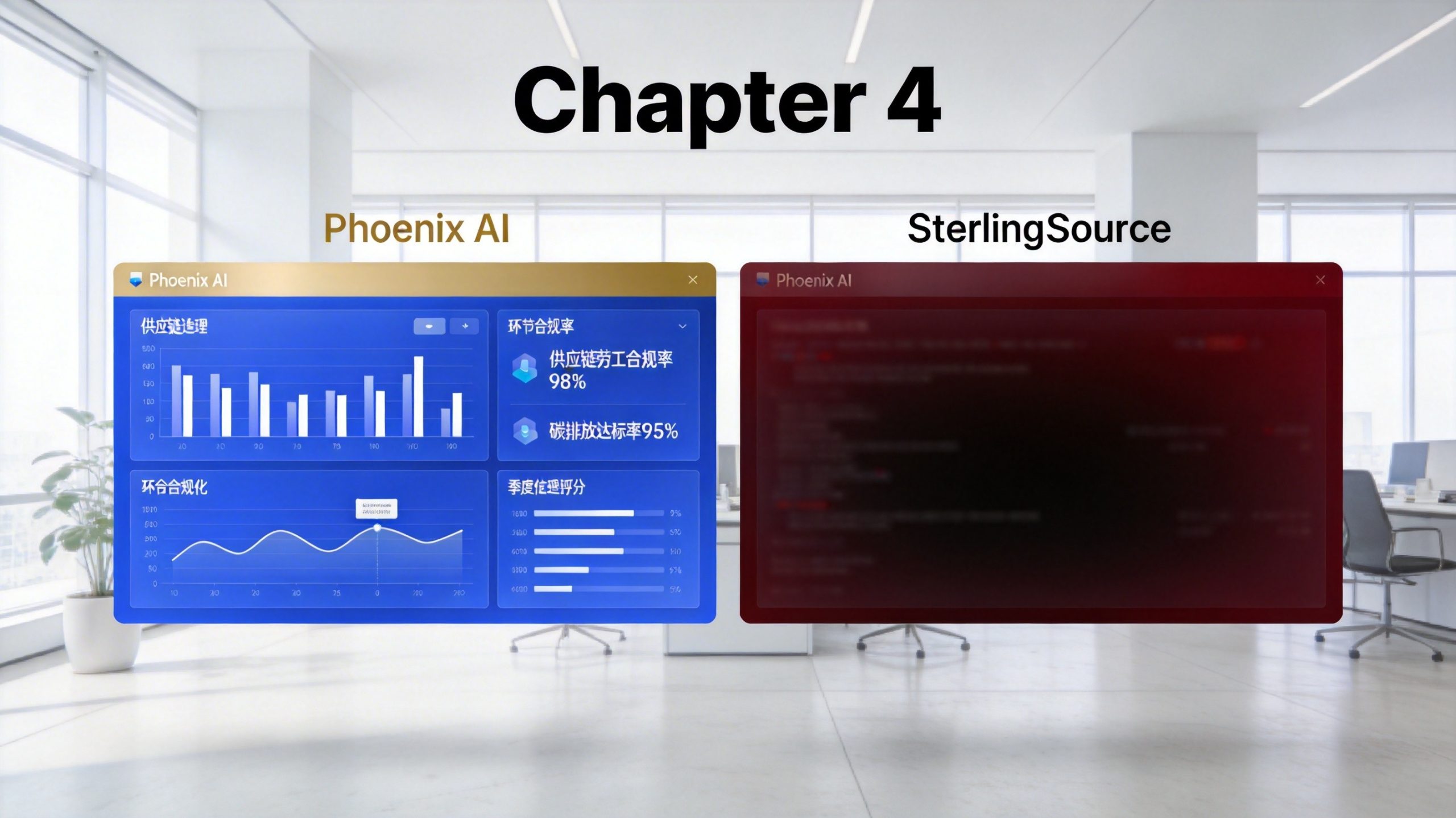
Phoenix AI, the system Marcus had built, was designed around transparency. Every decision the AI made was traceable, explainable, and subject to human oversight. The system learned from ethical failures in the supply chain and adapted to prevent them from happening again.
SterlingSource’s AI system was opaque. Unaccountable. Designed to prioritize cost reduction over ethical considerations.
The first major test of the two systems came from a Fortune 500 retailer that had contracts with both Phoenix Connect and Sterling Enterprises. They ran a side-by-side comparison of our platforms for six months.
The results were devastating for Alexander.
Phoenix Connect flagged twelve potential ethical violations—child labor in a textile factory, environmental dumping at a manufacturing plant, safety violations at a shipping facility. All twelve were verified and corrected.
SterlingSource flagged zero violations.
Not because there were no violations. Because the system wasn’t designed to find them.
The retailer cancelled their SterlingSource contract and tripled their Phoenix Connect investment. The case study went viral in business media.
Alexander responded by launching a PR campaign attacking Phoenix Connect’s credibility. He questioned our AI methodology, accused us of falsifying data, and implied that our ethical standards were exaggerated.
But the Phoenix Network had prepared for this.
Three weeks after Alexander’s PR campaign launched, the New York Times published an exposé on Sterling Enterprises’ supply chains. The investigation revealed twenty-seven verified ethical violations—everything from underpaid workers to environmental disasters—that SterlingSource had missed or ignored.
The article also revealed the source of the information: anonymous whistleblowers who’d been working with the Phoenix Network.
Alexander was furious.
He called me the same day the article was published.
“This is a war, Emma,” he said. “And you just escalated it.”
“It was never a war, Alexander,” I said. “It’s a choice. You chose profit over ethics. We chose ethics over profit. The difference is that we’re winning.”
Three days later, SterlingSource announced it was “restructuring” its AI methodology. Two weeks after that, Alexander fired the entire SterlingSource development team.
Phoenix Connect’s valuation doubled. Our client base grew to include 20% of Fortune 500 companies. And the Phoenix Network added fifty new members—women who’d been watching from the sidelines, waiting for proof that ethical business could succeed.
But the real victory wasn’t in the numbers.
It was in the message we were sending: You don’t have to compromise your values to build an empire. You don’t have to destroy others to rise. And you can win against opponents who play dirty—by playing better, smarter, and more ethically.
The war was far from over. But Phoenix Connect wasn’t just fighting for survival anymore.
We were fighting for the future of business.


